This process of writing a reflection at the end of the day has been really helpful for me. I find it’s a way to reflect and learn more about God, about deepening my faith as I really apply my mind to seeing God in the day just gone or wrestling with things that provide stumbling blocks. Usually, something presents itself as inspiration.
This evening, as I started to write, I found myself at a loss. To be clear, I don’t know everything there is to know about God, and I still have things to wrestle through, but today, I just hit a block. It’s not that today was bad; just the opposite. It was a standard, ordinary day. I got up and went to work. I did my job until it was time to come home. I cooked dinner and talked to my housemates. It was all fairly mundane.
And that, I think, is part of the challenge. In times of trouble, I can reach out to God for help. In moments of joy, I can pray in gratitude. But on an ordinary day, when everything is just ticking along, it’s easy to go through the motions without noticing God at all.
I’ve gotten into the habit of reflecting back over my day, asking God to reveal where He was, noting the good and the bad without judgment, and letting it all go. It’s an Ignatian practice called the Examen, and I’ve found it a good way to round off the day. Until today.
Reflecting on today is hard because I’ve already forgotten most of it, and when I ask God to reveal where He was, I get… silence.
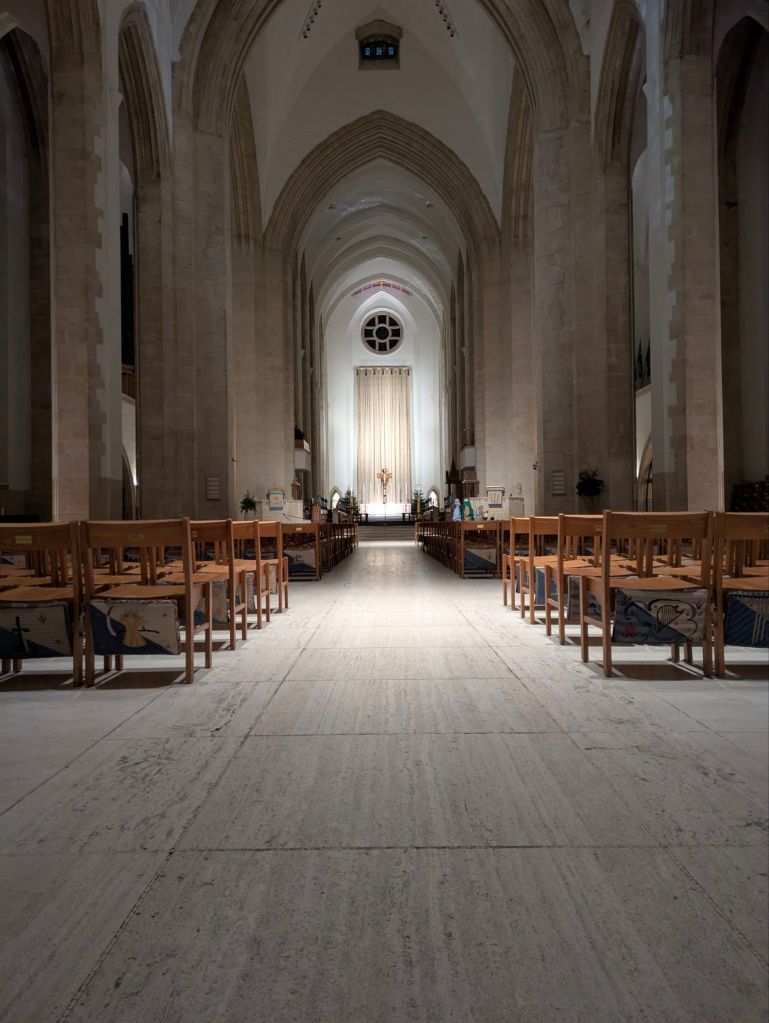
Silence can be refreshing, a welcome pause from the noise of life. But silence can also be disconcerting, a worrying sign that I’ve wandered away from where I’m meant to be. I love silence in worship, those moments of simply soaking in God’s presence, whether He speaks or not. But I also fear silence, because it’s in the quiet that doubt speaks the loudest.
That got me thinking, this isn’t the first time God’s people have faced silence. In fact, there was a time when it lasted not just a day, but centuries.
The Bible is split into two main parts (okay, that’s a massive oversimplification, but bear with me): the Old Testament and the New Testament. The Old Testament tells the story of how the nation of Israel came to be, how it split, was sent into exile, and later restored. There are kings, judges, and prophets; laws, histories, and poetry. Some of it is hard work to read, while other parts are gripping tales of battles and unlikely victories.
The New Testament is the story of Jesus – His life, death, and resurrection – and the birth of the church. But between the end of the Old Testament and the beginning of the New Testament, there are roughly 400 years of silence. No prophets. No new scriptures. No divine revelations. Just silence.
Can you imagine being a Jew in those 400 years? Going to the synagogue but secretly wondering if God had stopped listening? Trying to live righteously in the hope that the Messiah might come? Or maybe just going about the daily, mundane tasks of life, not thinking about God at all?
But here’s the crucial detail: God may have been silent, but He was never absent. Even in the silence, He watched over His children. Even in the silence, He was preparing the way for reconciliation. Even in the silence, He loved.
Silence really is a test of faith. It’s easy to trust God when He’s speaking loudly into our lives. It’s much harder when the days feel empty, and we realize we haven’t thought of Him at all.
But the truth remains: God is present, even when we don’t perceive Him. And if God’s people could endure 400 years of silence, I think I can manage one ordinary day.
 The Reason for my Hope Blog