Easter 2026: He is alive. He is here.

The cross is empty. The body is buried. The tomb is sealed. The voices have fallen silent. Nothing moves.

It was silent.

Until it wasn’t.

Some of the women who followed Jesus arrive at the tomb, ready to properly prepare the body. They expect death, a sealed tomb, a lost friend. But…

The silence is broken.

The stone is rolled away. The tomb is empty. Death is not the end. Jesus is not there.

Jesus knew. He knew Judas would betray him. He knew he would suffer and die. And it mattered.

Jesus went. With head held high, he pushed on towards the cross. He knew that the story didn’t end there.

Jesus suffered. He did not lash out, he did not give up, he bore it out of love. He knew it was worth it.

It was silent. Jesus died, his body was laid in a sealed tomb. But it was not finished.

All the confusion from yesterday, those promises that haven’t come to pass yet, the closed doors and dead ends, the grief and despair of lost hope – they don’t have the last word.

Because a door will open, in God’s time. The promises are true, in God’s time. Hope will spring again, in God’s time.

The hope of the disciples, everything they had experienced and trusted in, was never wasted, was not misplaced. Even when things looked dark, God was at work.

Because the tomb is empty, but Jesus is not gone. The women find the body gone and tell the others. And then, one by one, they begin to see him. Walking with them on the road. Standing among them in a locked room. Meeting them on a mountainside.

Jesus is alive.

Not just then, but now. Not just for them, but for us. Because we still know what it is to wait. To sit in silence. To face closed doors and endings we didn’t choose. We still find ourselves in those in-between places,  where Easter Sunday has happened, and yet we are still living in something that feels like Holy Saturday.

But the silence is not empty. God is still at work. Even here.

The stone has been rolled away. Death has been defeated. Hope is not lost. Even if we cannot yet see it.

Jesus is alive. And he is here.

Here, in the waiting.

Here, in the questions.

Here, in the places that still feel unfinished.

The story is not over. And neither are ours. He is alive. He is here.

Thanks to Jakob Owens @jakobowens1 for making this photo available on Unsplash 🎁 https://unsplash.com/photos/gray-clouds-during-golden-hour-uWbRcJSJLV8

Lent 2026: It is silent. God is not finished.

Holy Saturday.

It is finished.

Jesus knew. Jesus went. Jesus suffered. Jesus endured. Jesus died.

The cross is empty. The body is buried. The tomb is sealed. The voices have fallen silent. Nothing moves.

It is silent.

Some of us know this feeling. Something we were sure would happen… didn’t. We are left grasping. Promises that feel broken. Prayers that seem unheard. God who feels distant. Doors closed, and no new ones opening.

A dead end.

All we have left is the memory of hope. We have trudged forward, with grit and determination, against resistance, because we trusted God. We have endured hardship, found the strength to stand, because God knows how we feel. But today…

It is silent.

Where do we go from here? It feels like there is nowhere left to go, nothing left to do. Were we wrong?

All those things we’ve experienced, do they mean nothing? Those promises we trusted, that we hung our hopes on… were they empty?

Maybe that’s what the disciples were thinking. From their perspective, the journey is finished, and the mission has failed. Everything Jesus told them led them to believe something better was coming.

Instead: grief. Death. Despair.

In some ways, nothing has changed. And yet, everything has.

It is silent.

But it is not finished.

The promises still point… somewhere. Something hard to grasp. Hard to comprehend.

Silence does not mean absence. Silence does not mean nothing is happening.

Behind a heavy stone, in a dark tomb… something is.

It is silent, but God is not finished.

It is silent, but the story is not over.

It is silent… so now we wait.

It is silent, but dawn is coming.

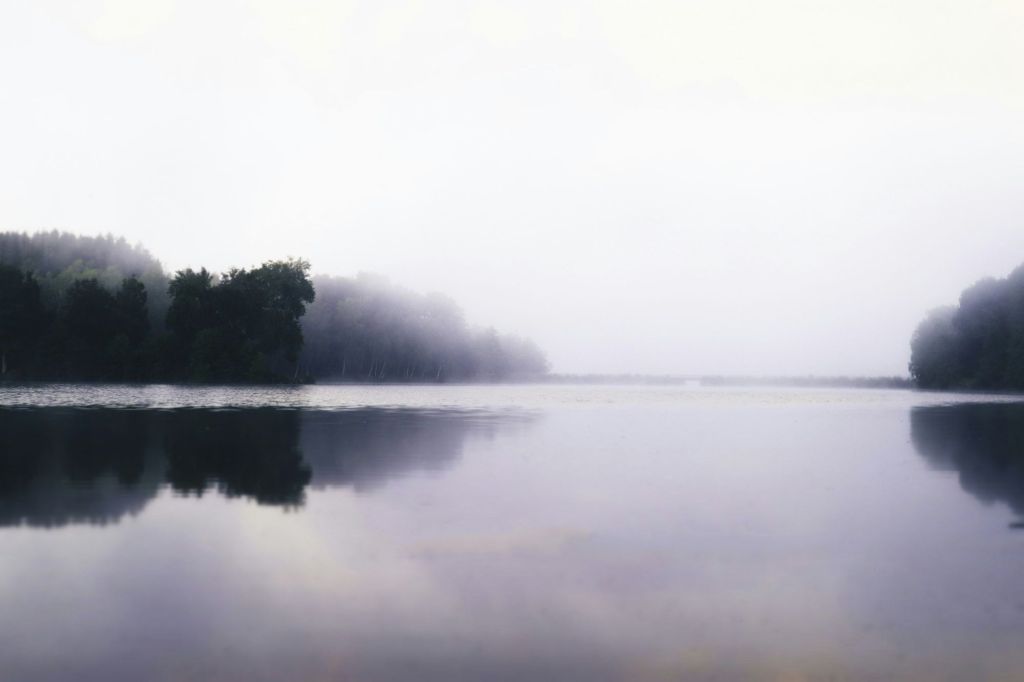
Thanks to Amandine BATAILLE @amandine_bataille_photo for making this photo available on Unsplash 🎁 https://unsplash.com/photos/a-body-of-water-surrounded-by-trees-and-fog-5i8JoOz91-Y

Lent 2026: He suffers. He stays.

The Good Friday narrative is not easy reading.

Betrayed.
Bound.
Abandoned.
Interrogated.
Flogged.
Humiliated.
Whipped.
Stripped.
Beaten.
Burdened.

Crucified.

It is tempting to rush past it. To move quickly to what comes next. But this is where the story lingers.

Jesus suffers. And he stays. Not untouched. Not distant. Not shielded from it.

He feels it. All of it.
The physical pain.
The emotional weight.
The humiliation.
The abandonment.
Even the silence of God.

And still, he stays.

Not because he cannot leave. But because he chooses not to.

The story is more than a single moment on a cross. It is layer upon layer of suffering, carried step by step.

For us.

Take that in. Jesus does not stand at a distance from suffering. He enters it. He bears it.

For you.

Whatever you are walking through right now, however heavy or painful or overwhelming it feels, Jesus is not unfamiliar with it.

He knows.
He suffered.
And he stayed.

Not just then.
He stays with you now.

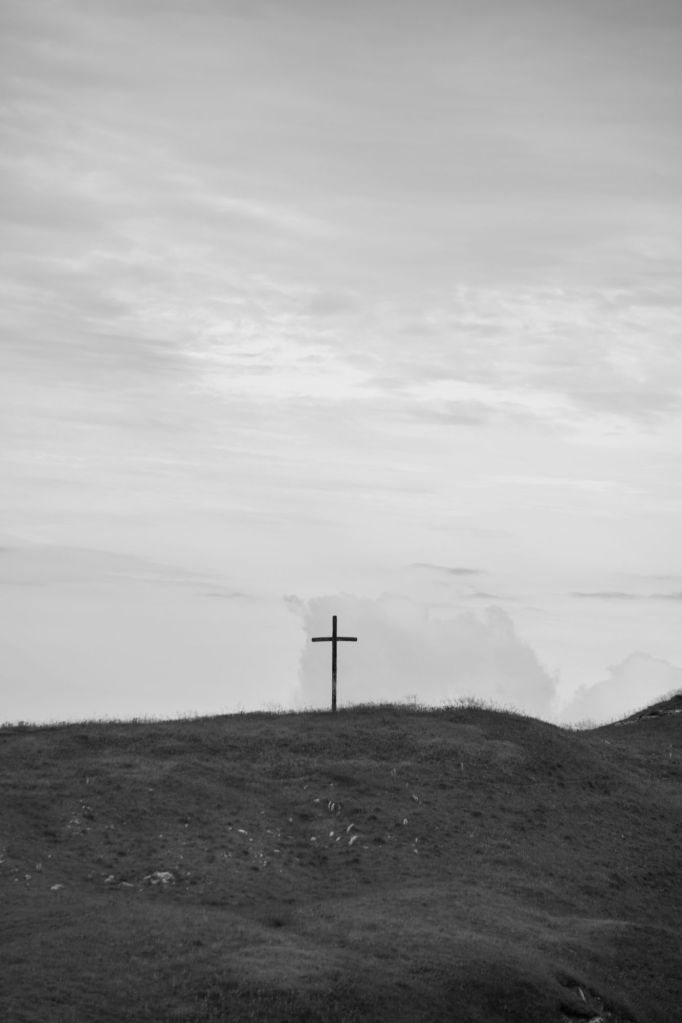
Thanks to Sven Pieren @sven_pieren for making this photo available on Unsplash 🎁 https://unsplash.com/photos/gray-cross-on-green-grass-field-under-white-sky-during-daytime-npl_R94xGZA

Lent 2026: He knows. He goes.

Jesus knew that the hour had come for him to leave this world.

He knew.

So often we rush past that. We focus on the meal, or the foot washing, or the vigil, or we skip straight to Friday. But before all of that, John tells us something simple and profound:

Jesus knew.

He could have run. He could have slipped away quietly, avoided the suffering. He could have stirred unrest, caused chaos, tried to change the outcome. But he didn’t.

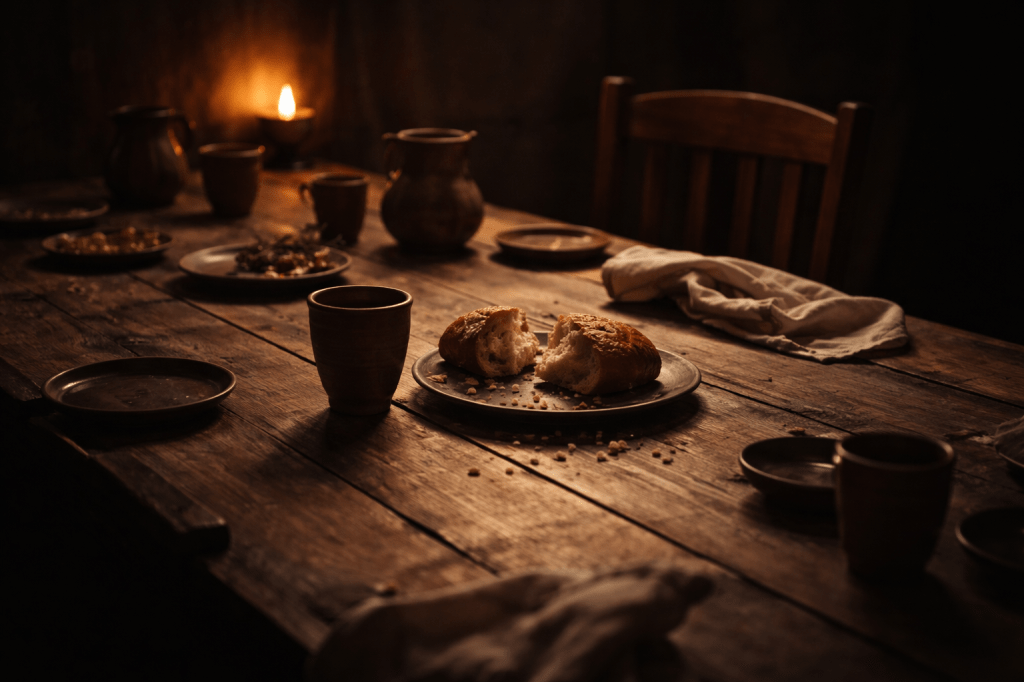
Jesus knew, and still… he chose to break bread with his friends, giving them, and us, something to remember him by.

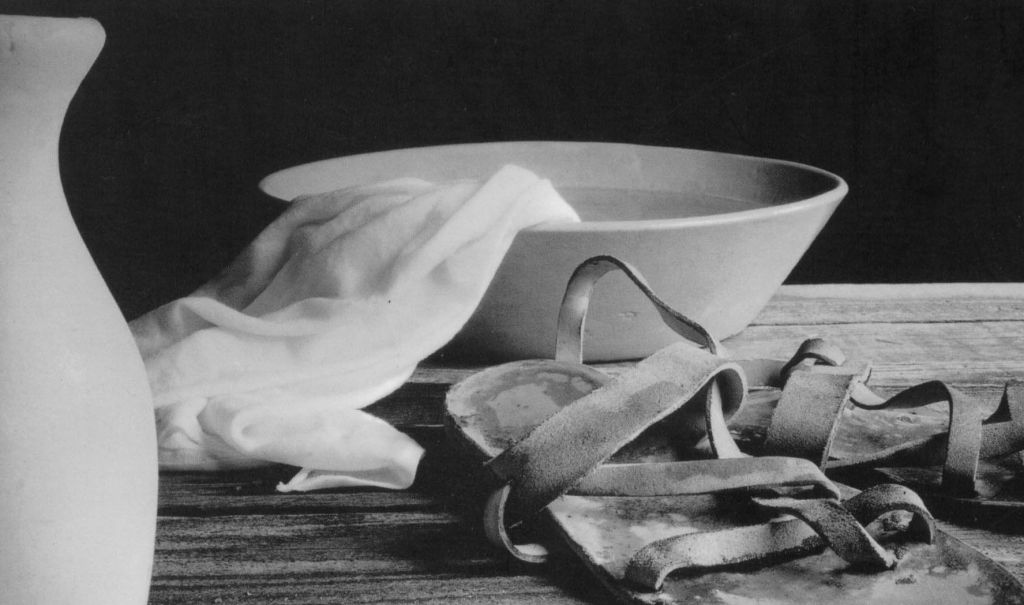
Jesus knew, and still… he knelt and washed their feet, giving his disciples, and us, a model to follow.

Jesus knew, and still… he spent the evening teaching them, giving them, and us, a new commandment: to love as he loved.

A friend of mine talks about “trudging” through Lent. Trudging is walking purposefully and determinedly, despite resistance or opposition. It’s like wading through water or mud, or leaning into wind and rain. It can be cheerful, but sometimes it’s grim. It requires grit. Sometimes sheer bloodymindedness.

That feels close to this moment. It’s easy to imagine Jesus moving through this night with calm certainty, knowing it will all be alright in the end. But Jesus is human too. If I knew what was coming, I think I’d be heading in the opposite direction. That would feel like the sensible choice.

But Jesus doesn’t run. He doesn’t drift. He doesn’t detach. He knows the weight of what is coming, you can hear it in his words, feel it in the way he speaks. And still, he gets up. He kneels. He teaches. He walks forward. Not serene detachment. Not dramatic heroism. But something steadier. Harder to name.

He keeps going. He trudges on, step by step, into something he would rather avoid.

I wonder if there’s anything like that in our lives. Not a cross, not a public trial. But something ahead of us that we’d rather not face. Something costly. Something heavy. Something we understand just enough to want to turn away.

The temptation is to avoid it, to distract ourselves, to pretend we don’t know what it might require.

But God does know what that feels like. He has been there. And still, he goes.

And he doesn’t leave us to walk alone. So whatever you are facing, whatever feels heavy or inevitable or quietly overwhelming, remember Jesus on this night.

He knows. And still, he goes.

Lent 2026: He knew. He stayed

Somewhere in the middle of Holy Week, a quiet transaction takes place.
No crowds. No spectacle. No raised voices. Just a question, a price, and an agreement.

And just like that, everything shifts. Tradition calls this Spy Wednesday. The day Judas goes to the chief priests and asks what they will give him if he hands Jesus over. The moment the decision is made. The point of no return.

All the pieces are now in place.
The tension that has been building begins to tighten. The ending feels inevitable. If I were writing the story, this is where it starts to slip out of the light. This is where evil begins to win. And it happens so… quietly. No dramatic confrontation. No sudden collapse of faith. Just a decision. A choice made in the shadows. A friend becomes the betrayer.

It’s easy, I think, to sit at a distance from Judas and say, I would never do that. Peter? Maybe. Acting out of fear, under pressure, in the heat of the moment… I can understand that. There’s something recognisably human there.

But Judas? A calculated decision? An exchange? No. Not me. Never.

Except…

I wonder if that’s entirely true. Because Judas doesn’t just betray Jesus. He trades Him. He places a value on Him. Thirty pieces of silver.

It’s not primarily rejection. It’s exchange. And that’s where it gets uncomfortably close to home. Because, since choosing to follow Jesus, I don’t think I’ve ever consciously decided to walk away from Him. I’ve never stood in a room and named my price. But I have, at times, chosen other things over Him.

Quietly. Subtly. Without much drama at all. Time, given elsewhere. Attention, spent on everything but Him. Comfort, chosen over obedience. Busyness, dressed up as importance. Time with loved ones, chosen over time with God.

Not a dramatic betrayal… just a series of small exchanges. Piece by piece.

We rarely lose Jesus all at once. More often, we exchange Him slowly, in ways that barely feel like loss at the time. And the uncomfortable truth is, it can look almost ordinary while it’s happening. That’s what makes this day so sobering for me. Because on Spy Wednesday, it looks like darkness is organising itself, like human choices give evil the edge. Plans are forming. Control is shifting. And if you didn’t know how the story ends, you might think this is the beginning of the end.

But it isn’t.

What looks like victory for evil… is actually the moment it overplays its hand. Because even here, even in the quiet exchange, even in the shadows where decisions are made… God is not absent. God is not surprised. God is not losing.

He is, somehow, still at work. More than that… Jesus knows. He knows what Judas has already set in motion. He knows the price that’s been agreed. He knows how this story will unfold. And still…

He sits at the table with him. He breaks bread with him. He kneels and washes his feet. He does not withdraw. He does not harden or reject. He does not love him any less.

Which means this isn’t just Judas’ story. Because Jesus knows the ways we choose other things. The quiet exchanges. The subtle drifting. The moments we wouldn’t name as betrayal, but which pull us away all the same. And still…

He draws near. He offers Himself. He loves. Not because we’ve earned it. Not because we’ve stayed perfectly faithful. But because that is who He is.

That doesn’t make the choices any less real, or the exchanges any less costly. But it does mean this:

Even when we realise we’ve been trading away what matters most… we are not beyond His reach. Even here, He is already moving towards us.

He knew. He stayed. And the story is not over, for Judas or for us. Not yet.

Lent 2026: What’s left over

Yesterday, I took a look at Mark’s gospel. Today, I want to sidestep into Matthew.

A couple of times in posts this Lent, I’ve been honest about running on empty. About turning up to prayer and being carried by the words of others because I’ve got nothing left. About sitting in the quiet on my own and finding that the tank is still empty.

And sometimes, that’s ok. Sometimes life is full, and God meets us in that. But this hasn’t been a one-off. This has become something of a pattern.

I give 100% to the people around me. Time, energy, listening, cooking, showing up, serving… I am very good at doing. Very good at making sure other people are ok. Not so good at receiving. Not so good at stopping. Not so good at making space.

Just recently, after I’d finished serving, someone came to talk to me. And somewhere in that conversation, she said: “You’re very good at doing, at making sure everyone else is looked after. But I’ve watched you… you’re not very good at taking.

It wasn’t said harshly. It didn’t need to be. Because it wasn’t the first time I’d heard something like that. In fact, recently it feels like this theme has been echoing around me. In conversations. In books. In songs. The same gentle nudge, again and again. Like Someone is trying to get my attention.

Yesterday, I wrote about how God doesn’t leave things that aren’t good. How He challenges, not to condemn, but from a place of love. I wonder if this is one of those moments.

Because in Matthew’s gospel, in Holy Week, Jesus speaks some hard truths. He challenges people who are doing all the right things, saying all the right words, living lives that look full of faith from the outside.

And usually, when I read passages like that, I ask: Am I being fake? Am I getting this wrong? But that’s not the question that’s been sitting with me.
Instead, it’s this: What am I giving God?

Because the truth is, right now, I’m giving my first to everyone else; my first energy, my first attention, my first care.

And then I come to God… with whatever is left. Not because I want to. Not because I ever decided that’s how it should be. But because, slowly and quietly, that’s what my life has become.

And the thing is, it doesn’t work. Because when God gets my leftovers, I end up with nothing left at all. I keep pouring out… and wondering why I feel empty.

Maybe the invitation here isn’t to give more or try harder.  Maybe it’s to reorder things. To give God my first, not my last. To come to Him before I’ve spent everything else. To receive before I try to give. Because it’s only when I’m filled that I can truly pour out.

And maybe this is what God has been gently, persistently, lovingly trying to show me. Not a rebuke, an invitation, to live differently, to be sustained, not just spent, to give from fullness, not from what’s left behind.

Thanks to Bundo Kim @bundo for making this photo available on Unsplash 🎁 https://unsplash.com/photos/clear-drinking-glass-u6zifx6JPzY

Lent 2026: He won’t leave it like this

Yesterday, we waved palms. Today, the tone shifts.

Holy Week has a rhythm to it, even if we don’t always notice it. After the celebration of Palm Sunday, the Gospels slow things down. They linger in the final days before the cross, drawing our attention to what Jesus does, and what he sees. In the Gospel of Mark, we’re told that Jesus enters the temple, looks around at everything… and then leaves. He doesn’t react. He doesn’t explode. He notices.

And then he comes back.

We often picture this moment as sudden anger, tables flying in a burst of divine rage. But that’s not quite what the Gospel shows us. This isn’t a knee-jerk reaction. It’s a considered one. Jesus sees what’s happening, takes it in, and returns to deal with it. The tables are still turned. The injustice is still confronted. But it isn’t uncontrolled.

No one gets hurt. It’s not rage. Its considered. It’s purpose. And if I’m honest, that unsettles me more.

Because I quite like the idea of a God who only ever feels safe and gentle. A God who comforts, not ones who disrupts. A God who understands… and leaves things as they are. But that’s not who we meet here. We meet a God who loves too much to ignore what is wrong.

This moment is framed by another strange one: the fig tree. A tree full of leaves, giving every impression of life, but bearing no fruit. And Jesus curses it. It feels jarring. Out of place. Almost unfair.

But placed either side of the temple cleansing, it starts to say something deeper. This is what it looks like to appear alive, but be empty underneath. This is what it looks like when something meant for life and flourishing has become hollow. And Jesus will not leave it that way.

I wonder how often my life looks like that fig tree. Busy. Full. Leafy, even. But if you looked closely, would there be fruit? Would there be genuine patience, kindness, gentleness… or just the appearance of them?

It’s easier than I’d like to admit to settle for looking the part. To build a life that appears faithful, while quietly allowing things to take root that don’t belong. And here’s the uncomfortable truth: God sees it.

Not with a flash of temper. Not with unpredictable anger. But with clear, unwavering vision. He notices. And then, in love, he acts.

We don’t often talk about this, but we are all being formed. Not just those in training, or ministry, or some intentional programme. Every day, in a thousand small ways, our hearts are shaped by what we give our attention to. We are always becoming something. Either we are being transformed, slowly, into people who look more like Jesus… Or we are being conformed, just as slowly, into something else. There isn’t really a neutral ground.

Which means the question isn’t whether God is at work in us. It’s whether we will let him be. Because the same Jesus who gently welcomes us is also the one who overturns tables. The one who refuses to let what is harmful stay hidden behind what looks good. Not to shame us. Not to punish us. But to make space for something better. For real fruit. For life that isn’t just surface-deep.

I’m not sure I always want that. If I’m honest, I’d rather keep a few tables where they are. Let things look tidy. Manageable. Acceptable.

But Holy Monday reminds me that God is not interested in appearances alone. He is interested in truth, in wholeness, in lives that actually bear fruit. And the strange, steady comfort in all of this is that he doesn’t act out of uncontrollable rage. He sees. He waits. He returns. And then, with purpose and love, he begins to clear what does not belong.

Maybe the prayer for today isn’t for comfort. Maybe it’s this: Lord, if there are tables in my life that need turning…
give me the courage to let you.
And if there is fruit that isn’t growing…
teach me how to live in a way that it might.

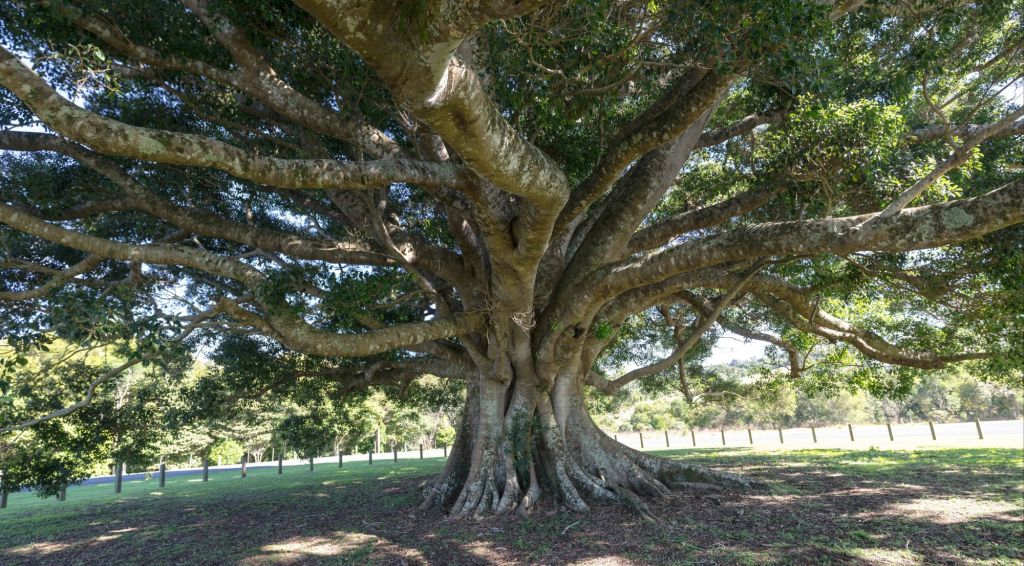
Thanks to Michael @michael75 for making this photo available on Unsplash 🎁 https://unsplash.com/photos/green-and-brown-tree-on-green-grass-field-lOT11X89JGA

Lent 2026: Not what we expect

Today is Palm Sunday. The beginning of Holy Week. The day Jesus rode into Jerusalem: the long-awaited Messiah, the one people had been hoping for, waiting for, longing for. And He arrived… on a donkey.

Not a noble steed. Not surrounded by splendour or ceremony. No polished display of power. Just a borrowed animal, plodding its way into the city. And still, the crowds cheered. They spread palm branches and cloaks on the road. Jesus had a reputation by this point, a healer, a teacher, someone who spoke with authority. People knew there was something different about Him.

But He didn’t use that moment to elevate Himself. He didn’t turn it into a spectacle. He chose the donkey.
That’s not how you expect a king to arrive. And I think that’s exactly the point.

Jesus never placed Himself at a distance from humanity, despite being fully divine. God didn’t remain somewhere far off and unreachable. He came close. He walked among us. He lived an ordinary life. So yes, He entered the city on an ordinary donkey.

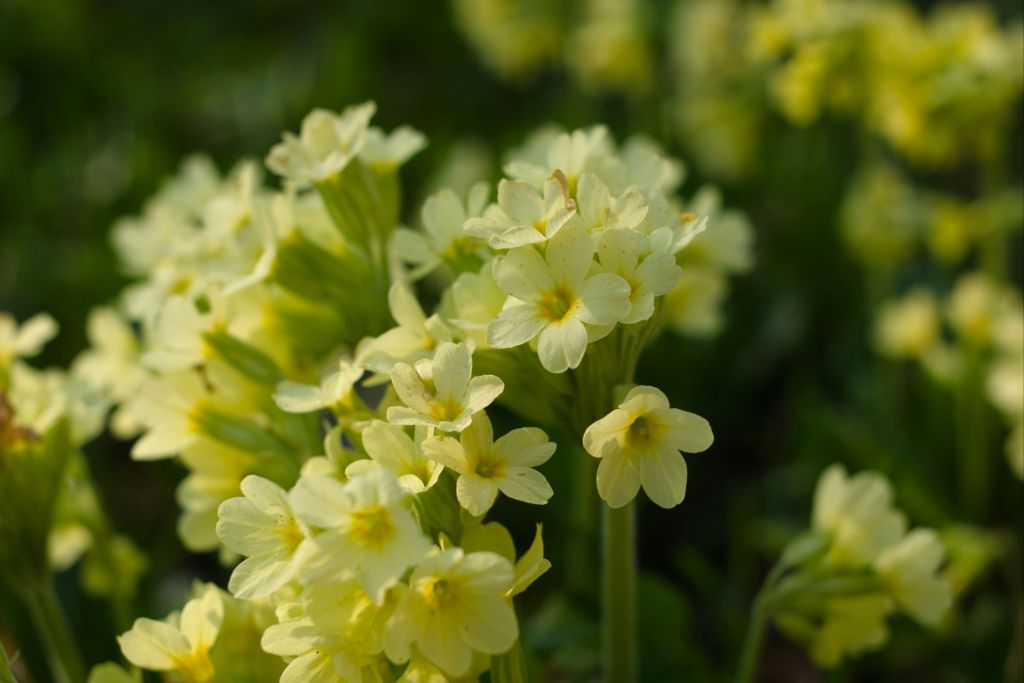
I had breakfast with a friend this week. We were catching up, sharing some of the joys and the hard bits. Both of us know things aren’t always easy. She told me about her journey to work. Temporary traffic lights have made it longer, more frustrating. So she tried a different route. And that detour took her past ditches lined with primroses. She smiled as she said it: “It’s the little things that brighten our days.”

A week or so ago, I was feeling overwhelmed and anxious. I stepped outside for a moment. The sun was shining, finally, and the birds were singing in the trees. Nothing dramatic. Nothing extraordinary. But I paused. I listened. And I felt better.

The people in Jerusalem were expecting a warrior king. Someone powerful, decisive, unmistakable.
Instead, they got a man riding a donkey.

Sometimes, we’re not so different. We look for big signs that God cares. Clear answers. Obvious interventions. Something unmistakable. But so often, what we’re given is quieter than that. Primroses in roadside ditches. Birdsong in the middle of a stressful day. A moment of stillness when everything feels too much. Not loud. Not impressive. Easy to miss.

But maybe that’s how God so often chooses to come. Not in the spectacle, but in the ordinary. Not in the overwhelming, but in the gentle. Not always in the way we expect… but always closer than we realise.

Thanks to Andrew @anarhronon for making this photo available on Unsplash 🎁 https://unsplash.com/photos/yellow-primroses-in-full-bloom-in-the-spring-AMQnNQmegYA

Lent 2026: Prayer – come as you are

The last couple of posts have been about prayer – the frustrating kind, the empty kind. The kind where words don’t come, or where they come out tangled and sharp-edged. I wanted to say, as much to myself as to anyone else, that this is normal. That struggling with prayer doesn’t mean you’re doing it wrong.

And maybe that’s where this post begins: with the quiet fear that we are (or I am) doing it wrong.

I wonder what you were taught prayer should look like. Maybe it was the “classic” pose: hands together, fingers pointing upwards, eyes closed, head bowed, finished with a confident Amen. There’s something comforting about that shape, something familiar. It’s a good way to pray.

But it’s not the only way.

Maybe you’ve heard people pray in a way that feels almost like poetry, words flowing, beautifully chosen, weaving together things you wouldn’t have thought to say. And maybe you’ve found yourself listening, grateful they’re praying, but quietly thinking, I could never do that. That, too, is a beautiful way to pray.

But it’s not the only way.

Maybe your prayers have followed a pattern – thank you, sorry, please – whispered at the end of the day, half-asleep, somewhere between habit and hope. There’s something steady and grounding in that rhythm.

But it’s not the only way.

Because if the last couple of posts have reminded us (me) of anything, it’s this: prayer isn’t always polished. Sometimes it’s frustrated. Sometimes it’s silence. Sometimes it’s just a sigh that barely forms into words. And those prayers count too.

When Jesus teaches about prayer, he points people away from performance. Not the loud, showy kind that draws attention, but something quieter, more hidden, more real. Prayer that isn’t about being seen, but about being known.

Because God isn’t listening out for eloquence. He’s listening for you. Not the tidied-up version. Not the carefully edited version. Just you, as you are, distracted, honest, tired, hopeful, unsure.

Maybe prayer doesn’t need to cover everything. Maybe it doesn’t need to sound like poetry or follow a structure or end neatly. Maybe it’s allowed to be incomplete, because we are. At its simplest, prayer is just relationship, a conversation shaped by who we are, with the God who made us that way. And if each of us is different, then it makes sense that our prayers would be too.

So perhaps the invitation isn’t to pray better. Perhaps it’s to stop trying quite so hard. To lay down the pressure to be eloquent, or complete, or impressive. To let your prayers be as scattered or as simple as they need to be. Because God isn’t waiting for perfection.

He is only ever waiting for you.

Thanks to Ümit Bulut @umit for making this photo available on Unsplash 🎁 https://unsplash.com/photos/tilt-shift-photography-of-person-in-brown-jacket-qbTC7ZwJB64

Lent 2026: Prayer – when words fail

Yesterday I wrote about prayer that feels unheard. The kind that leaves us discouraged, wondering if anything is happening at all. I wrote about perseverance, about trust. If I’m honest, I was writing as much for myself as for anyone else.

Today I want to write about another problem I know all too well: praying when the words won’t come. It feels like my regular prayer times have been quiet lately. Not peaceful-quiet, but empty-quiet. The kind where you sit down to pray… and realise you don’t actually know what to say.

I think there are at least two versions of this. The first is what comes after yesterday. When we’ve been praying for something for so long that we’ve simply run out of words. There’s nothing new to add, nothing left to say. Just that ancient cry: “How long, O Lord, how long?” Sometimes words fail because they’ve been used up.

The second is different. It’s when we come to pray and find… nothing. No energy, no clarity, no starting point. Maybe it’s exhaustion. Maybe it’s being overwhelmed. Maybe it’s something deeper we can’t quite name. But the result is the same: we show up, and the words just aren’t there.

Maybe thats why prayer is a spiritual discipline ; it isn’t always easy. Sometimes it takes real intention just to keep turning up.

The Bible does speak, briefly, into this space. Paul writes in Romans that the Spirit intercedes for us through wordless groans. Even when we can’t pray, somehow prayer is still happening.

But more often, Scripture doesn’t explain this experience so much as respond to it. It gives us words. When the disciples didn’t know how to pray, Jesus didn’t give them a technique or a strategy. He gave them a prayer.

Our Father…

I think that matters, because when I have no words, I borrow them. The Lord’s Prayer, yes. But also hymns. Taizé chants. Familiar phrases that have been prayed and sung for generations. Words that somehow reach deeper than I can manage on my own. Words that carry not just my prayer, but the prayers of countless others across time and place.

When I have nothing to say, I am not left alone in the silence. I am held by the prayers of the Church.

Sometimes, even that feels like too much. Sometimes prayer becomes something quieter still. No words, not even borrowed ones. Just presence.
Sitting. Breathing. Being. Letting God be at the forefront of my mind, without trying to fill the space.

Because I don’t think  prayer was ever meant to be a performance of words.
Maybe, sometimes, it is simply companionship.

Thanks to Jubéo Hernandez @youbeyo for making this photo available on Unsplash 🎁 https://unsplash.com/photos/a-wooden-bench-overlooks-the-ocean-at-sunset-L2UN0V9jBCw