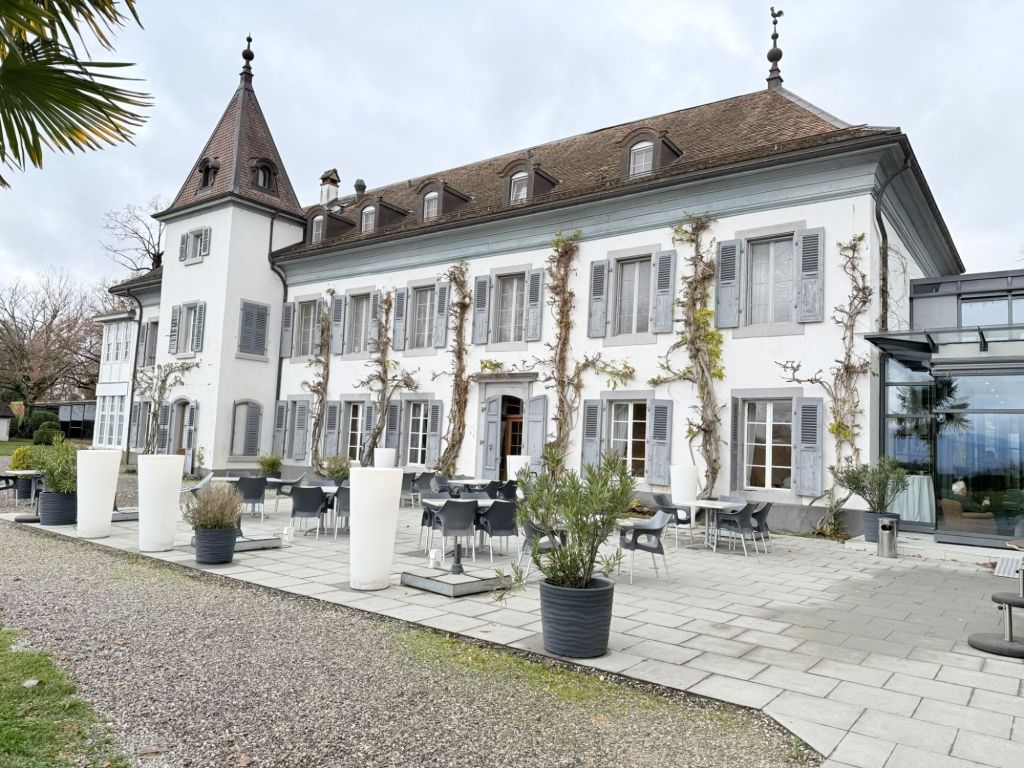
I had a change of scenery this week. I traded icy Durham for rainy Geneva to visit the Ecumenical Institute at Bossey, part of the World Council of Churches.
Bossey is a place where students from all over the world come to study for a semester or, like my group, drop in for a tailored visit lasting a few days. While we were there, we had the opportunity to talk to some of the semester students, sit in on some of their lectures and receive some specialised teaching of our own.
This was a special visit, bringing together theological students training for ministry in the Church of England, but from a whole range of traditions and backgrounds. It was a wonderful opportunity to get to know one another better and appreciate the breadth of the Church of England, but also to put that breadth into the context of the global Church.
My own background is ecumenical. I don’t sit neatly in any one box, and my faith journey has been heavily influenced by Christians from different denominations and traditions. There might be details we disagree over, and of course some of those differences matter, but underneath it all, we love the same God.
Our sessions at Bossey were packed with information: the history of ecumenism throughout the 20th century, the divisions that have developed between Christian traditions over the centuries, and the work being done today to bring Christians together.
Some sessions highlighted the difficulties, reminding us that not all disagreements are easily overcome or simply differences of opinion. Others were full of hope, sharing the work Christians around the world are doing to speak out against injustice, stand alongside one another and bring about real change.
But running through it all was a central idea: a unified Church isn’t just a nice aspiration. It’s a biblical imperative.
To be clear, unity doesn’t mean uniformity. Ecumenism isn’t about pretending that our differences don’t exist, or that we all need to agree on everything. Rather, it’s about leaning into the things that unite us, and not becoming so focused on the things that divide us.
There are some pretty fundamental things we share: our belief in the Trinity, our faith in Jesus Christ, our baptism (although even here there are some disagreements) and our desire to follow God. And yet there are also areas where our differences present real challenges. The Eucharist, for example, remains one of the significant barriers to full unity between Christian traditions. These aren’t necessarily differences that can be easily brushed aside, and recognising them honestly matters.
In John 17:20–23, we find Jesus praying that all believers may be one. This isn’t a modern church trend, or simply a response to the tragedies of the early 20th century. It’s a prayer from Jesus himself, recorded in Scripture. Unity matters because it matters to Jesus.
One of the things that encouraged me most this week was seeing how God is at work. Sometimes we see God’s fingerprints in the little things, sometimes in much bigger ways. We see God working behind the scenes, drawing people together and patiently bringing about meaningful change.
I was also encouraged by the number of young people who choose to study at Bossey. In a world where it can sometimes feel as though the Church is struggling to find its place, here were young Christians from across the world, choosing to invest their time and energy in learning about one another and working towards a more united Church. Christians still care. They still want to work for unity. There is hope.
Sometimes the differences between us can feel enormous. Some seem almost impossible to overcome. And yet, people still come. People are still willing to listen, to learn, to be challenged and to remain open to one another.
God is at work.