Lent 2025: What really matters

Have you ever been on your way to something really important, only to be held up by someone asking for help? Or maybe you’ve had a looming deadline, but a friend suddenly needs advice? Or perhaps you’ve carefully planned out your day, only for something unexpected to come up, forcing you to shift your priorities?

Once a week, I drive into work from a neighbouring town. I like to leave plenty of time in case of traffic, especially if I have a lot to do, because arriving early gives me a chance to catch up on tasks before my colleagues arrive with their questions (freeing me up to help them later).

This morning, a friend needed a bit of support. I had two options: stick to my routine and leave on time, or pause to be present for my friend and risk being a little late. I chose the latter. For me, this was an easy choice – people are the most important thing, after all.

But what if it had been a stranger on the side of the road? Would I still have made time? It’s a tough question. We live in a society that often prioritises productivity over people. Sometimes that’s not through choice; many workplaces wouldn’t accept “I helped a stranger” as a valid reason for lateness or a missed deadline. Other times, it is a choice, and we decide to prioritise ourselves or our reputations.

Now, I’m not saying there’s never a time for boundaries. Even Jesus stepped away from people when he needed time to rest and pray. But he also responded to immediate needs, making sure his actions came from compassion, not convenience.

One powerful example is when Jesus meets a religious leader named Jairus. Jairus’ daughter is gravely ill, the doctors can’t help, and he’s desperate. So, he throws himself at Jesus’ feet and pleads for him to come and heal her. Jesus agrees, and they set off, pushing through the crowds, knowing every second counts.

Suddenly, a woman who has been ostracised for 12 years due to an ailment that made her “unclean” reaches out and touches Jesus’ cloak, believing it will heal her. It works – her body is healed instantly – but Jesus notices and stops. He searches for the person who touched him, and the woman comes forward, trembling. She tells her story, and Jesus listens. He doesn’t rush her. Instead, he calls her daughter – the only time he uses this word in the Gospels – restoring not just her health, but her identity.

Imagine the tension. Jairus must have been panicking; his daughter was dying, after all. And sure enough, while Jesus is speaking to the woman, messengers arrive to say the girl has died. But Jesus doesn’t turn back. He continues to Jairus’ house, goes inside with his closest disciples, and tells the little girl to get up. In an astonishing second miracle, she rises from her bed, alive and well.

Jesus values both the ostracised woman and Jairus’ family, he makes time for both.

The situations we face day to day may not be as dramatic, but the challenge remains. Maybe sometimes we need to pause and re-evaluate our priorities. What is really important?

What do you think? When have you had to choose between your plans and someone else’s needs? I’d love to hear your thoughts.

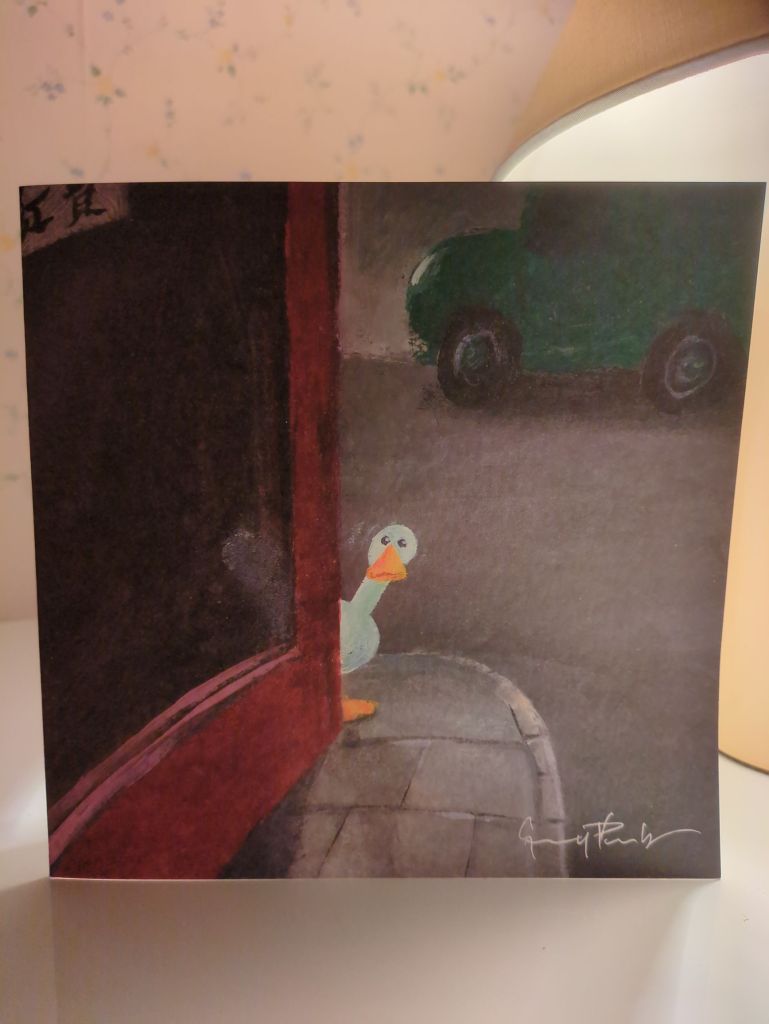
Lent 2025: The ‘Peeking Duck’

I run a Community Choir, and it’s one of the highlights of my week. There’s almost as much laughter as music, and no matter what kind of day I’ve had, I always leave with a full heart. We’re a mix of people with different jobs and backgrounds, but we come together to sing, create something beautiful, and share a lot of joy.

I do love the choir, but there are times I get in from work and just want to collapse and not go back out again. Leading a choir isn’t as simple as just showing up. There’s choosing and arranging songs, planning performances, and keeping rehearsals flowing so the music doesn’t get lost in the banter.

Even on days when I’m tired and tempted to stay home, I show up — because I love these people and the music we make together.
Still, there are times when it feels like all the unseen work goes unnoticed

Tonight I found a card in my bag. One of my choir members had spotted it and thought of me. (For context: I love ducks.) On the front was a ‘peeking duck’ — which made me laugh — and inside was a heartfelt message thanking me for everything I do. I don’t lead the choir for the thanks, but moments like that remind me that what I give makes a difference..

What does this have to do with God? There’s a story in the bible. Jesus is on a hillside preaching to thousands and evening comes. They don’t have any food, I guess time flew by, so the disciples worry what they will do. They encourage Jesus to send the crowd to away to feed themselves, but Jesus says, ‘you feed them.’ I’m not sure about you, but I suspect if I had been in the position I might have either laughed incredulously or had a minor panic attack. Instead the disciples find a boy who has 5 loaves and 2 fishes with him, and Jesus performs a miracle and that little amount of food multiplies and feeds thousands with baskets to spare.
What has occured to me recently in that story is the faith of that boy. There are thousands needing food, what good will his small offering have? But in the hands of Jesus, giving what we have is enough.

This is a lesson I am learning. It’s not always grand gestures or riches that are needed. Just giving what I have is enough – my time, my energy, my talents and my heart.

I have that ‘peeking duck’ next to my bed so I can look at it and smile. And yes, the duck makes me smile. But more than that, it reminds me that the little I do — even when it feels small — is enough. In God’s hands, my time, energy, talents, and heart can be multiplied in ways I may not always see, but that make a difference. And that’s enough

Lent 2025: Ordinary joys

This morning, it snowed. Not enough to settle, just a gentle flurry — but enough to make me smile. Snow always feels special, maybe because we don’t see it very often here. It reminds me of childhood winters, of visiting my grandparents in the north and waking up to a world transformed overnight.

There’s something about snow that feels like a gift. It falls silently, covering everything in a layer of white and muffling all sounds, as if nature itself is encouraging stillness. And yet it also encourages childlike joy with snowmen, snowball fights, and snow angels. “For to the snow he says, ‘Fall on the earth,’ likewise to the downpour, his mighty downpour” (Job 37:6). It’s a reminder that even the smallest moments in nature are part of God’s design, a gentle whisper of His presence.

Today wasn’t filled with grand events, but it was rich with ordinary joys. I met wonderful new people and felt the warmth of human connection. Those encounters, however simple, felt like blessings. “Do not neglect to show hospitality to strangers, for by doing that some have entertained angels without knowing it” (Hebrews 13:2). I wonder how often God’s grace reaches us through others, in the kindness of a conversation or the shared laughter of a first meeting.

It’s easy to overlook days like this, to think that gratitude is only for the big things. But maybe part of living with a thankful heart is noticing the divine fingerprints on the small, quiet moments too. The snow that made me smile. The strangers who felt like friends. The reminder that God’s love is woven through even the most ordinary of days.

This is the day that the Lord has made; let us rejoice and be glad in it” (Psalm 118:24).

Today, I’m grateful for the little things, and for the gentle nudge to notice God in all of them.

Lent 2025: When all doors are open

Sometimes, we expect decisions to be simple – that one door will swing open, bathed in light, while the others quietly close. One of my favourite sayings is, “When the Lord closes a door, somewhere He opens a window.” But what happens when all the doors are open, and every path seems to echo with possibility?

I’ve been walking through a different city today, a place shaped by centuries of prayer and learning. Its ancient cathedral stands tall over winding rivers, cobbled streets, and the hum of life. The Northern Saints feel especially present here; their legacy lingering in the stones, the stories, and the quiet spaces carved out for worship. There’s something reassuring about the weight of history, a reminder that countless people before me have wrestled with uncertainty, brought their questions to God, and found a way forward, step by step.

I thought the right path would be obvious, that I’d just know. But instead, I’ve found myself torn between several good options, wondering how to choose when each way seems full of potential for growth and joy.

Maybe, though, the gift isn’t in finding the one “perfect” answer but in discovering that God walks with us in the discernment itself. That He is in the beauty of a new place, the warmth of friendly faces, the quiet hush of a cathedral soaked in prayer. Perhaps the right path is the one we walk with trust, knowing that whatever we choose, we are never choosing alone.

For now, I’ll keep walking – along the river, beneath the shadow of ancient spires, through open doors. And I’ll try to trust that the light will be there, even if it only illuminates the next small step.

Lent 2025: Travelling Light

At work today, a colleague popped in to say hi and mentioned he was having a “filing day.” He’d been carrying around stacks of paper from various meetings, and it was getting heavy, but now he had a drawer, so he was finally sorting through it all.

I know someone else who always carries a huge rucksack, packed with all sorts of things. Partly to be prepared, partly because it’s hard to sort through everything, so instead, he just lugs it all around.

These are very visible examples of burdens people carry, but the truth is, we all do this in some way. Maybe you’ve known someone with a “Mary Poppins bag,” endlessly deep and filled with everything “just in case.” At school, my bag was always heavy – not just with essentials, but with extra books, because you never know when you’ll have a chance to read!

Do we need to carry all this stuff? Probably not. But somehow, it feels safer to have it with us. Or does it?

There’s comfort in being prepared, but carrying extra weight – physically or emotionally – comes at a cost. Aching backs, sore shoulders, tired feet. And that’s just the physical toll. What about the invisible burdens? The worries we carry for loved ones. The guilt or shame from past mistakes. The fear or anxiety about the future.

For some of us, these hidden burdens weigh so heavily that they crowd out hope, joy, and peace. And just like an overstuffed bag, the longer we go without sorting through it, the more it fills up.

But Jesus offers us a different way.

In Matthew’s Gospel, he says:
“Come to me, all who are weary and heavy laden, and I will give you rest. Take my yoke upon you and learn from me, for I am gentle and lowly in heart, and you will find rest for your souls. For my yoke is easy, and my burden is light.”

Jesus models this himself. He travels light, physically and emotionally. He doesn’t cling to possessions, and he shares his worries with the Father in prayer. And he doesn’t add to our burdens, unlike the religious leaders of the day, piling on rules and expectations. Instead, he offers a gentle yoke, a way of living that frees us from the crushing weight of carrying everything alone.

Maybe it’s time to have a “filing day” for our souls.
To sort through what we’re carrying and ask: Do I need this?
And if not, to hand it to Jesus.

He’s always there, ready to share the load.
But more than that, he offers freedom, not just to carry our burdens with us, but to lay down the ones we were never meant to bear.

Lent 2025: Seasons of Change

It feels like there’s a lot of change in my life right now. In the past year, I stepped away from an organisation I’d been part of for seven years. My church came under new leadership, and in the coming months, it will merge with a larger church, bringing a shift in structure and rhythm. At work, we’ve said goodbye to some key people, welcomed new faces, and adjusted to a new person in charge. And as for the future? Well, I’m not quite sure what that holds for me.

I think we all go through seasons like this. Change is inevitable as we and the people around us grow and evolve. It can be exciting or painful – sometimes a mixture of both! We celebrate the new, but we also grieve what we leave behind.

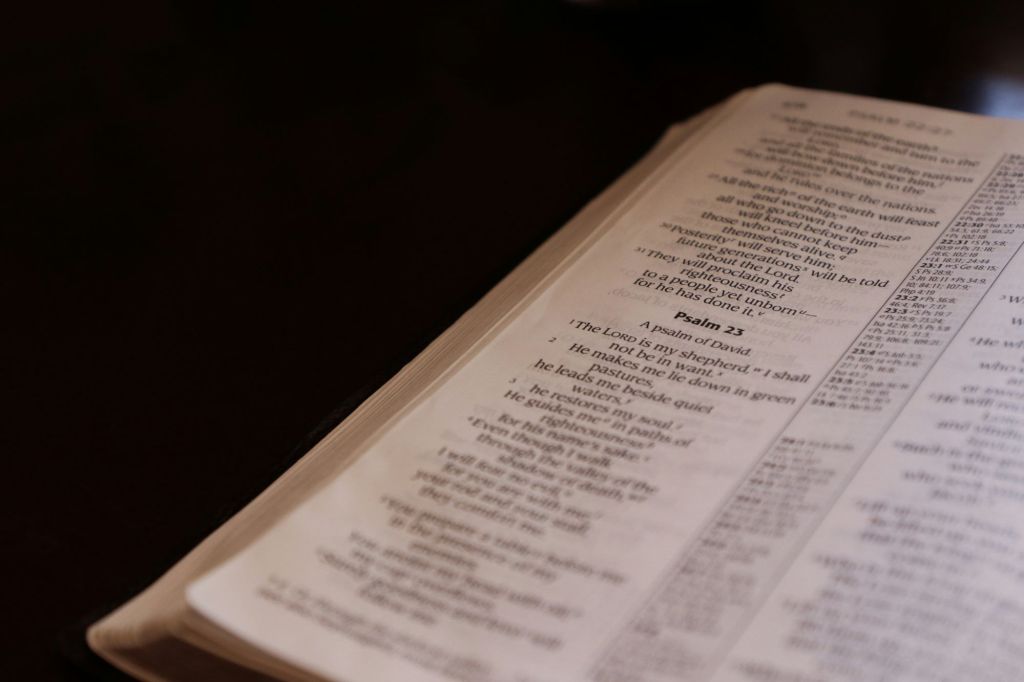
You might be wondering why I’m reflecting on this today. On my Lenten reflective walk, I spent time with Psalm 23, focusing on the theme of trust. It’s a psalm many people in my country know as the “Vicar of Dibley Psalm” (thanks to its use as the TV show’s theme tune). But today, I read it slowly, almost as if I’d never seen it before, letting each phrase settle in my heart. I held a question in the back of my mind: Where do I need to trust God as my shepherd right now?

A few answers came to mind, especially in relation to my loved ones. But as I lingered on the words, I was struck most by the constancy of God. Verse 4 stood out:
“Even though I walk through the darkest valley, I will fear no evil, for you are with me; your rod and your staff, they comfort me.”

I wouldn’t say the past year has been my darkest valley, but it hasn’t been an easy path either. As chapters have closed, I’ve had to adjust – to a new way of doing things, to stepping away from familiar spaces, to welcoming new people and letting go of old routines. And yet, through it all, my Shepherd has been there. A steady, comforting presence.

If I’m honest, I’ve sometimes taken that presence for granted. But reading the psalm today, I felt a gentle nudge from God:
“You can trust Me. I won’t change or leave. I’ve got you.”

So today, trust and gratitude have woven together in my heart. I’m so, so thankful for the unwavering presence of God, a presence I have always been able to, and will always be able to, trust.

What about you? Where in your life do you need to trust God as your shepherd right now?

Lent 2025: Gratitude or Grumbling

I don’t know about you, but life often feels like a mixed bag. One day, everything flows perfectly — like the event I helped with last night. The next, things don’t go quite as smoothly, and that was my experience tonight. I must admit, my first reaction while scrambling to get in control of things, was to focus on the negatives. But as the evening went on, I calmed down a little and realised, while not as smooth as last night, it was still a great event and those who came had a great evening.

We always have a choice. We can choose to focus on the negatives, how we wish it was better, or we can find the positives and celebrate them. There is a passage in Philippians they says ‘Finally, beloved, whatever is true, whatever is honorable, whatever is just, whatever is pure, whatever is pleasing, whatever is commendable, if there is any excellence and if there is anything worthy of praise, think about these things.” And in 1 Thessalonians Paul writes, ‘Rejoice always, pray without ceasing, give thanks in all circumstances; for this is the will of God in Christ Jesus for you

Which is all very well and good, but then you add other people into the equation! There are some people who spread positivity. And I don’t mean those who are always happy with false smiles at all times, but those who bring a sense of calm, who acknowledge the reality but also find good points. But there are also those who choose to be negative, who will find something to criticise even at the best of times. Most of us are a mixture of these depending on the time of day, or how hungry or tired we are, or some other circumstance. Sometimes others negativity can be contagious, but sometimes positivity can be just as contagious.

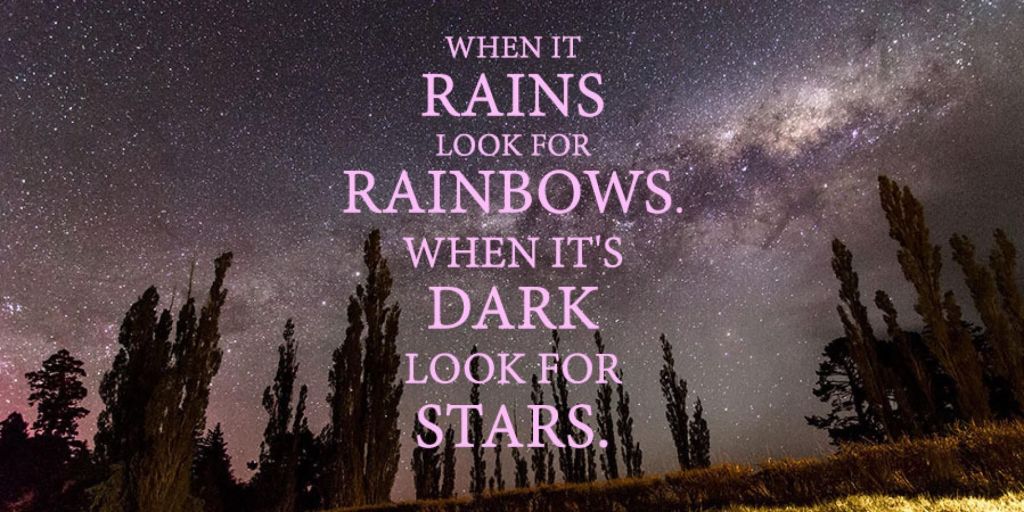
The rest of the chapter in Thessalonians talks about how we should encourage one another, building each other up, and how we should hold onto the good. There is a saying, ‘when it rains, looks for rainbows; when it’s dark, look for stars.’ Now, I don’t mean that we should be naively positive – the rest of the letter to the Thessalonians acknowledges struggles and difficulties – but it is good to practice looking for something positive too. This is something I get wrong a lot of the time, but I’d like to get better.

So next time I feel overwhelmed by what went wrong, I want to practice looking for the stars — those small glimpses of grace that remind me God’s light is still there, even in the dark

Lent 2025: A Tapestry of Gifts

This evening was a blast. I was involved in a fundraising quiz for work – well, actually, I organised it. And it was absolutely fantastic! There was a real buzz in the air, everyone seemed to have a good time, and it all went without a hitch. But my favourite moment came halfway through.

For a little while, I could sit back and watch. The kitchen was serving up crumble, the raffle and tombola were being run by colleagues and volunteers, the quizmasters were taking a well-earned break. Like a well-oiled machine, everything was working together.

At the end of the evening, in typical British fashion, the quizmasters, the head chef, and I were caught in a cycle of congratulating each other – each trying to pass the credit on to someone else. You know the situation:
“Thank you, you really set the tone.”
“But you did the hard work.”
“Yes, but we couldn’t have done it without them.”

It got me thinking. First, how wonderful it is to be part of a team so eager to build each other up that this conversation happened sincerely. And second, how each of us brought different gifts to the table.

I could stand at the door and welcome people because I knew reliable hands were running the raffle. The kitchen team knew where to send the food because I’d set up table labels. I could relax, knowing the food would be excellent. The quizmasters could focus on presenting, balancing the need to get through questions with giving teams time to think – and adding a little light-hearted banter. Meanwhile, they trusted me to get the questions on screen and tally the scores.

It sounds pretty basic written out like that, but in reality, with all these things happening at once, it felt like a tapestry – each thread contributing to the whole. Take one part out, and the tapestry loses something, or even starts to unravel.

So yes, it’s good to congratulate each other. But you know what? It’s also okay to accept the congratulations from others.

And so it is on a larger scale. Each of us has different skills and gifts. By combining them and working together, we create the richest, most beautiful tapestry. It’s like Paul says in 1 Corinthians – a body has many parts. An eye shouldn’t compare itself to an ear, because they each serve a different purpose (my paraphrase).

When we compare ourselves to others, we miss the beauty of diversity – and often diminish our own contribution, or theirs. But when we encourage one another’s gifts and have the courage to step into our own, wonderful things happen. Tonight was a great example of that for me.

Tonight reminded me that life works best when we lean into our gifts and trust others to do the same. Whether it’s running a quiz, serving up crumble, or simply showing up with a smile, every thread matters. And when we weave them together, the result is more joyful and vibrant than any of us could create alone.

Lent 2025: Practice the Pause

Phew! Reached the end of day! It feels like I packed a lot in. In fact, a lot of days feel like that at the moment. Can you relate? We have a house calendar so we know who is in (and how many to cook for) and there are some weeks that I’m not home any evenings because of meetings or rehearsals or other engagements. And work! I do love where I work, but sometimes there is just so much to do!

Why am I saying all this? I’m sure there are plenty of people out there who are busier than me! I’m saying this because when I got home from work today, before heading back out to choir, I sat in my car. I didn’t exactly plan to, but I got home, took the keys out the ignition, and stopped. After a full day, and knowing there was more to be done, it was wonderful to take a moment to just be still. I once read that sitting in your car outside your house is a form of self care. Today, I understood that sentence.

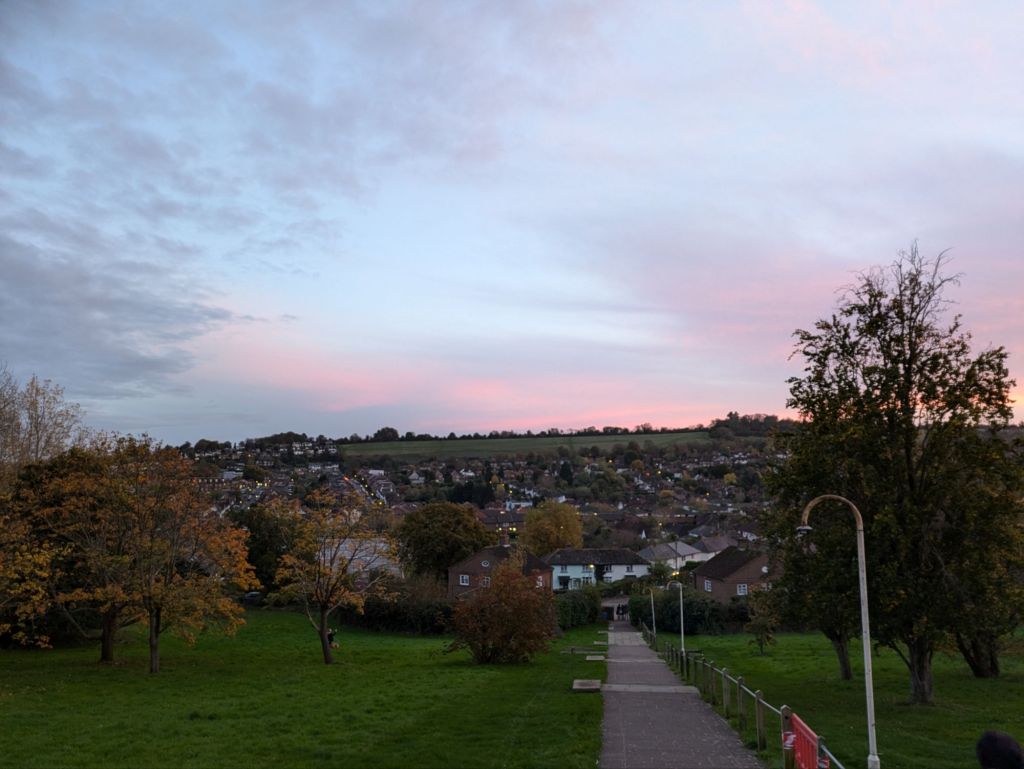
Looking back, I realise I do that more than I realise. Taking a breath before entering a room. Lingering after prayers or meetings. Stopping to watch a sunset or listen to the birds. On the best days, I go to ‘my spot’ and look out over the hills, listening to nature and enjoying the sun. Sometimes only for 10 minutes, but those are 10 precious minutes.

In the bible, again and again, Jesus withdraws to pray and spend time with God. It is from a place of rest and intimacy with God that Jesus does his ministry. I’m not as good at the withdrawing as I could be. But what I can do is allow those moments of pausing within my day, not always pushing on to the next thing. Yes, it is good to get away, and planned retreats are part of a healthy rhythm of life, but within everyday there are opportunities to pause. And the wonderful thing is that God meets us in them, even if we don’t realise it. I love those times in ‘my spot’ because I look at and listen to and feel God’s creation. But even those moments to breath, the lingering steps, the stopping and sitting, God is in them too.

I recently read about a contemplative missionary called Frank Laubach who wrote a book called ‘The Game with Minutes’. I haven’t read the book (yet!) but the premise is he invites the reader into a spiritual practice where they think of God at least 1 second of each minute. I’d love to get better at that, at pausing and intentionally bringing God more into my day. Maybe next time I get home, I won’t be in such a hurry to get out and put the kettle on. Maybe I’ll sit for a moment longer, breathe a little deeper, and remember that God is present — even in the pause.

Lent 2025: Honest as the Night Sky

Lent 2025 starts today, and with it a period of reflection. This year I’m trying something new: combining scripture and the outdoors for some reflective, prayerful walks. My plan is to do at least two a week.

Today I started with Psalm 51. If you aren’t familiar with this one, it’s a psalm of repentance. I read it through and set off, mulling over some of the phrases. What struck me most was the complete dependence on God. The psalmist brings all their faults, all their wrongdoings, to God, knowing that only God has the ability to wipe them away completely. God’s judgment is final, but in His mercy, He makes us clean when we ask for it. And that’s the second thing that stood out — the psalmist knows he can ask for forgiveness.

When we face people who might hold things against us, blame, or ridicule us, it can feel safer to hide or shift blame elsewhere. But to come before someone, open and vulnerable, asking for forgiveness, suggests deep trust. The psalmist shows that trust — he knows God is the only one who can truly cleanse him, and he knows God is willing to do so. That’s really quite remarkable, and a powerful place to start this Lent.

Something else struck me while I was out. Do you ever look up at the night sky? What do you see? Today’s walk was quite late, so it was dark, and the night was clear. My route took me through an area with little artificial light. Something else struck me while I was out. The clear night froze my fingers, but it also revealed the stars. I love looking up at the night sky, but so often, I can’t see much because of light pollution. But tonight, away from the man-made street- and house-lights, I could see the stars and the moon in all their glory.

Reflecting on Psalm 51, this felt like a living metaphor. It’s easy to get distracted by the artificial — the busyness and noise of life. But when we step away from the glare, we encounter something genuine and authentic. Likewise with God — we’re surrounded by things that try to fill a gap, but when we pull back from the noise and distractions, we come face to face with the real, authentic God. I can come, as I am, with no masks, nothing artificial, and know that God wants me, faults and all. And God, in His mercy, won’t hold it against me when I get it wrong.

Looking at the stars, I was reminded to be honest and real — because God’s creation is breathtaking, and His love is even more so. So, taking my lead from the writer of Psalm 51, knowing I am not perfect, I will spend some time this Lent acknowledging my own faults and reflecting on God’s grace and mercy.