Loved. Redeemed. Called. Equipped. Blessed. – lent 2023

If you were asked to write a list of words that described every Follower of Jesus, I wonder what words you would choose. The list in the title is one I heard used in a prayer this week. I love it. It seems to cover most things.

I sometimes worry that we paint an idealised picture of what it means to be a child of God, we try and make it something desirable at the cost of the truth. So I need the bible to confirm some of the things people say. For this particular list, you only need to look in one book. The letter to the Ephesians has all of these in the first 2 chapter:

Verse 3: Praise be to the Father of our Lord Jesus Christ who has blessed us in the heavenly realms with every spiritual blessing in Christ.

Verse 4: For he chose us in him before the creation of the world to be holy and blameless in his sight.

Verse 5: In love, he predestined us for adoption to sonship through Jesus Christ.

Verse 7: In him we have redemption through his blood, the forgiveness of sins, in accordance with the riches of God’s grace.

Verse 11: In him we were also chosen having been predestined according to the plan of him who works everything out to conformity with the purpose of his will…

Verse 13: And you also were included in Christ when you heard when you heard the message of truth… When you believed you were marked, in him, with a seal, the promised Holy Spirit

Chapter 2, verse 4 and 5: But because of his great love for us, God, who is rich in mercy, made us alive with Christ even when we were dead in transgressions – it is by grace you have been saved.

Verse 10: For we are God’s handiwork, created in Christ Jesus to do good works, which God prepared in advance for us to do.

I’ve cherry picked from the first 2 chapters, picking the most obvious references but the whole passage is worth reading and lingering over. It spells out the basis for our identity in Christ, who God made us to be.

It is very clear that we are loved. I’ve picked 2 verses ghat explicitly say it (and these were more I could have chosen) but it is also implied in the verses about blessings and grace. It is the number 1, fundamental, non-negotiable foundation: God loves us. No strings attached, no need to earn it, no fear of losing it – God loves you.

Because of that love, you are redeemed. Out of love, Jesus was born in human form, grew up, taught about God and died on a wooden cross. We are saved from sin. The second foundation: the price has been paid, we are forgiven.

The next two go together. We are called. Each of us is called by God. Sometimes it’s a clear calling into a specific job, sometimes it’s a calling to a place, sometimes it’s a lot more vague and takes more time to understand. But we are all called. But there are times when we may feel underrepresented or not qualified for what we are called to and we will count ourselves our and convince ourselves (or let others convince us) that we have misunderstood the calling. God doesn’t call the equipped, he equips the called.

God calls us forward and as we go we discover or learn what we need. We are equipped to do that which God is calling us into. But we don’t have to follow the calling. (Well, sometimes we do – take Jonah for example! But it’s not often a big fish swallows people) But God’s calling is to put you where you were meant to be to do what you were born to do. Calling first, equipping follows naturally.

And finally, blessed. Its a funny one. Looking around, I wouldn’t say everyone who follows Jesus is blessed in the conventional sense. They aren’t all rolling in money with dream jobs and secure housing. They don’t all have perfect health and loads of friends. But then maybe we need to change our definition of blessing.

Blessed more often means drawn closer to God. In the bible, blessings often pair with trials. Not that the trials themselves are blessings, but they are channels for God’s grace. It is in the trials that we can know a deeper love, that we can experience and closed walk, that we can strengthen our faith. So yes, blessed.

Would you add any words to the list? Is something missing? What would you say underpins a Christian’s identity in Christ?

Loved, redeemed, called, equipped, blessed.
The same but different – lent 2023

In a few weeks I have been invited to speak at a church. It’s after Easter so the passages they have given me are about what happens after Jesus has risen. There is the story of Jesus appearing to his disciples in a locked room on the evening of Easter Day (or its equivalent 2000 years ago) and then a bit of Peter’s first sermon after receiving the Holy Spirit and speaking in a different language. Because I’ve got some time to prepare, I looked up some commentaries to help me. In one of them I found an interesting point.

The point is how those who encounter Jesus stay the same and yet are changed. Thomas isn’t with the disciples when Jesus first appears and doesn’t believe so is sometimes nicknamed ‘Doubting Thomas’. Jesus appears again a week later and this time Thomas is with them. Jesus doesn’t tell Thimas off for not believing but gives him a chance to believe. Thomas sees Jesus and says, “My Lord and my God!” That is a old confession of faith. Today that may seem a typical address of Jesus, but back then he wasn’t often called that. So Thomas does from Doubter to Believer (with a capital B!) He looks the same and yet is different.

Next comes Peter. He is always passionate and outspoken. And yet, he also denies knowing Jesus out of fear for his life when questioned in the night of Jesus’ trial. So in the second passage, when he is faced with a crowd who could beat him up, who are accusing him of being drunk, he could repeat his actions. Instead, he doesn’t hesitate but begins to explain to the crowd what has happened and preach that Jesus is alive and is offering peace and forgiveness. The same passionate Peter, and yet different.

The final person to look at (although by no means are these the only three in the bible changed by Jesus) we come to Paul/Saul. To begin with he is well-read and very determined to persecute Christians. Then he meets Jesus and is thrown from his horse and blinded. When his sight is restored he begins to travel around preaching the gospel to non-Jewish people. He became one of the most influential early Christians. Still the same well-read and determined Paul, and yet different.

It got me thinking. What about us? Where have we been changed by Jesus? Or where will we be changed? Will people notice the change? And perhaps more importantly, what will stay the same? Peter’s passion is a big part of who he is. Paul’s determination is a key part of his character. What parts of our characters are essential ingredients that God can and will use? And how will he use them? What stays the same and what becomes different? I guess only God knows and when the time is right we will see.

Like a candle – lent 2023

A few weeks ago I came across a passage from Isaiah. Isaiah is quite a long book and I’m not sure I’ve actually read all of it, and if I have I definitely haven’t remembered all of it. So this passage was new to me, but also painted a picture that I liked.

“If you do away with the yoke of oppression, with the pointing finger and malicious talk,and if you spend yourselves in behalf of the hungry and satisfy the needs of the oppressed, then your light will rise in the darkness, and your night will become like the noonday.

Isaiah 58: 9b – 10

It’s like a description of what a Christian should be in one sentence. It’s also very counter-cultural (at least, in my opinion). It seems there are always people trying to take advantage of others, where injustice reigns, were the strong pick on the weak. The news is full of stories of this on a global scale with wars and dictators and on a more local scale with things like domestic abuse or bullying. What would it look like if there was no more oppression? How much lighter would the world be?

One thing I’ve noticed listening to stories of work places and adding my own experience is the blame culture and the amount of gossip. So often we can look to point the finger at who was at fault in order to berate them, or we can sit and spread rumours that aren’t really any of our business. Sometimes that’s the culture around us and it is so easy to join in. But what if we didn’t try and point the finger? What if, instead, we just looked for a way so it didn’t happen again? And what if, instead of gossiping g and spreading nasty rumours, we spoke positive things and spread stories of achievements, or at least didn’t join in?

Walking around the town centre I see people on the street begging for money or food. They don’t have enough and don’t necessarily have a way to get enough because they are trapped in a system. I’ve worked for a food bank in the past and most of the people who come just struck a bad patch. A couple of expensive bills, a nasty break up, a sudden job loss… it could happen to anyone. And suddenly there is a choice between heating and food, or between feeding themselves or feeding their kids. Most of them aren’t being irresponsible with money, they’re job just doesn’t pay enough to keep up with the rising prices and everyday needs.

But what if we were different? What if we shared what we had? Lots of people donate to food banks, and the homeless after seem to have at least a hot drink which has been given to them by a passer by.

One of the best illustrations I know of spreading faith is using a candle. If you light a candle in a dark room, it will give a bit of light. If a second candle lit from the first, the first candle doesn’t diminish. Instead there is now twice as much light. And you can add a third and a fourth, and the first candle will still be burning just as brightly and the darkness doesn’t seem so dark any more.

So what if we behaved differently? What if we tried to do what that verse in Isaiah said? We can’t change the whole world on our own. But if we can inspire one or two other people, and they can inspire some people in turn, suddenly we can make a difference. We can stop the gossiping work place, we can shift a blame culture. We can feed the hungry and help those on the streets feel seen. We can make a small difference and they will all add up and one day the world will be so full of light that ‘midnight will seem like noon’. Wishful thinking? Or hope in what could be?

By faith – lent 2023

Today I was reading from Hebrews. There is a passage about faith. It starts, ‘Faith is confidence about what we hope for and assurance about what we do not see’. This is a letter written after Jesus has risen to early Christians who would have known the Patriachs, the men from the old testament who showed faith. And so it goes on to list different people who showed faith in the way they behaved, choosing to believe in God’s word.

It’s quite a list. It includes Abel who brought the best of his lambs as an offering and was then killed by his brother our of jealousy. It includes Noah who built a massive ship and rescued his family and all the animals. It does include some impressive feats of faith-based action. But there are two that stand out to me. One is Sarah, wife of Abraham.

‘And by faith even Sarah, who was past childbearing age, was enabled to bear children because she considered him faithful who had made the promise.’ That’s not quite how I remember it. Looking back in Genesis, Abraham and Sarah are sitting in their camp when three visitors appear. Abraham tells Sarah to prepare some food and then goes and speaks to the visitors. They say that they will visit again next year and his wife will have a son. Sarah, listening from inside the tent, laughs in disbelief because she is too old. That doesn’t sound like someone who believed the promise.

And yet, she did have a son as God had promised. She may laugh at first, but in the end she does trust God’s promise and God follows through. In her heart she knew him to be faithful even if her head said otherwise.

Back to Hebrews. The second person is Moses. ‘By faith he left Egypt, not fearing the king’s anger; he persevered because he saw him who is invisible.’ Again, I remember the story slightly differently.

Back in Exodus, Moses is raised in Pharoah’s household but then sees an Egyptian hitting and Israelite slave and kills the Egyptian. It then specifically says, ‘Moses was afraid. “What I’ve done must have become known.” Then he fled from Pharoah.’ Pharoah did try to kill him so you can understand fleeing, but I would definitely say that Moses feared the king’s anger.

And yet, out in exile in the desert, Moses finds God speaking to him out of a burning bush. He did literally see him who was invisible and followed his instructions (if little reluctantly at first).

I don’t say this to pick holes in bible heroes. Actually, the complete opposite. There bible heroes were very human. Disbelief and fear are things we feel all the time, and sometimes the promises of God can be overshadowed by those or other emotions. And that’s OK. Both Moses and Sarah knew who God was. Deep down, they trusted him. Maybe their immediate actions weren’t motivated by faith, but their lives were.

In the big picture of their lives, the overarching theme that they are remembered for is that they lived ‘by faith’. They kept their eyes focused on God (most of the time). Having confidence in what we hope for doesn’t mean never doubting or questioning. It means choosing to hold the hope in the midst of the doubting, choosing to acknowledge the logical doubts in our minds whole feeding the flame of hope in our hearts. It doesn’t mean we aren’t affected by what we see around us. It means holding on to the belief that God keeps his promises and there is better coming and choosing to look beyond while we are being battered by what’s right in front of us.

If you’ve doubted or if you’ve acted out of fear or anger, that doesn’t mean you don’t have faith. If Sarah and Moses can inspire because of their faith, then so can we.

Boundaries and Barriers – lent 2023

The Sunday bonus this week is a little something to make you think. We come across barriers in life that stop us going places for no good reason. They are not from God. Then there are boundaries, put there for our protection. These are from God. Sometimes we can’t see the reason for the boundary but God can see further than we can and we need to trust that he knows best.

Look for the best – lent 2023

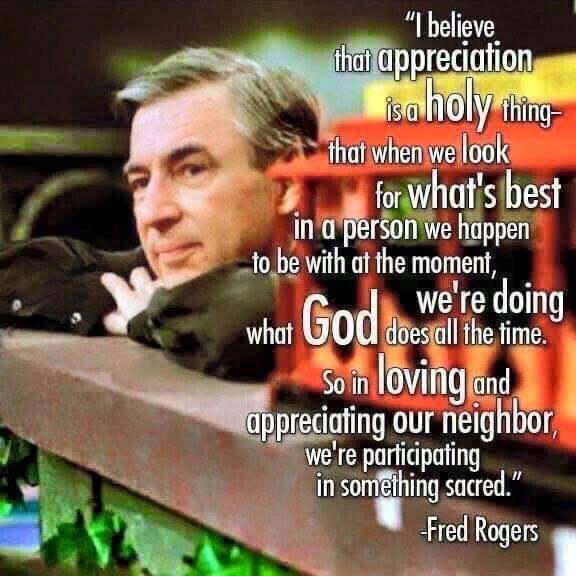
There’s been a theme in the films I’ve watched recently. ‘A Beautiful Day in the Neighbourhood’ is based on the life Mr Rogers, and American TV presenter who was wholesome and fair-minded and promoted love and equality with all. ‘The Incredibles 2’ is obviously a sequel and focuses on superheroes proving they can be trusted. ‘Paddington 2’, also a sequel, is the follow on adventures of Paddington as he tries to get his Aunt Lucy a birthday present.

Each of these films has talked about seeing the good in other people. Mr Rogers teaches about morality and tolerance in his show, and the film is specifically centred around forgiveness and looking for the good things. Elastagirl has a conversation with the main villain where the villain sneers at Elastagirl trusting people she’s only just met while Elastagirl explains that anyone can count on her – she is wired to see assume the best of people until proven otherwise.

But it was Paddington that brought this home. Wherever he went, Paddington was cheerful and optimistic. He took people at the word. Part of the film shows him interacting with the street’s residents, waving hello, giving them breakfast and helping them. Later, when Paddington isn’t around, you see them a bit more grumpy and a little less understanding of each other. On his adventures, Paddington comes across some criminals. But in chooses to see the best in the people he met, Paddington brought out the best in them.

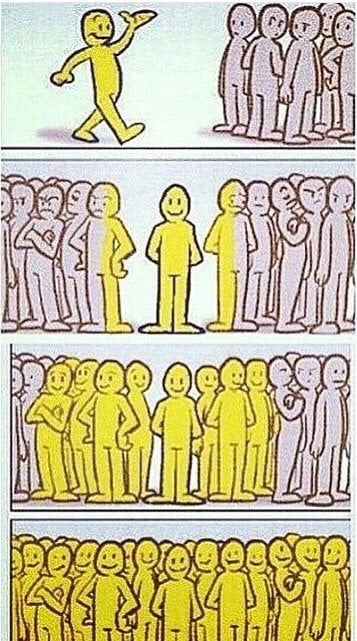
It was this film that really struck me. We can look at the people around us and make judgements quickly. We can focus on the things that annoy us very easily. But seeing the best in people? That takes practice. And yet, when we choose to see the best in people we bring that to the forefront. We give them affirmation and confidence.

God could have chosen to make judgements on the worst parts. But instead he chose to see the good. Take any bible hero – none of them are perfect. But God chooses to see the good and in doing so brings the good to the forefront.

Gideon, hiding in a hole scared for his life becomes a leader of an army, leading his people to victory. Moses, murderer and self-doubter, stands up to Pharaoh and gets the Israelites released. Peter, impulsive and loud, used to spread the gospel to Jews and played a large part on the spread of the early church.

That’s three examples without really thinking, they are plenty more to explore. Maybe we should take a leaf out of that book. Maybe we should look for the good in people instead of focusing on the bits that rub us up to wrong way. By doing that, we can help the people around us to grow.

But let’s not stop there. Why not try and see the good inside ourselves? Not the buts we want to hide, not the bits we don’t like or beat ourselves up over, but the good bits – it’s OK to acknowledge and celebrate the bits we like. Afterall, God sees and celebrate them!

Wear your own shoes – lent 2023

How often have you heard the term ‘big shoes to fill’? I’m sure it’s meant as an acknowledgement of the outgoing person but it can seem like a set of expectations on the person stepping into the role, expectations they are not likely to meet because they are a different person. Each person brings their own gifts and personalities to everything they do. Comparing to others, even unintentionally, is not helpful for anyone .

Why do I write this? Today someone sent me through something they had been working on. It was a poem and it was amazing. I know the person who did that job previously and they wouldn’t have been able to write a poem like that. But there were other things they could do, other things they brought to the role that the current role-holder doesn’t have. She had ‘big shoes to fill’ when she took the job and hasn’t even tried to fill them, instead she’s worn her own shoes. She brought what she had.

I have previously had a job where they were adamant they didn’t want another version of my predecessor but brought up the good work my predecessor had done a lot as comparison to how I was doing. Me and my predecessor were very different. They were married with young children, I was single. They were outgoing and extroverted, I was quieter and introverted. Neither of these is better, but they are different. I needed the space to be able to bring my strengths to the table instead of having to fill the shoes of my predecessor who had very different strengths to me.

In the bible, there’s a young shepherd boy called David. His older brothers are at war, and the enemy has a champion who calls out a challenge each day. David goes to deliver food to his brothers and hears the challenge. The champion calls out for a warrior to take him on, and if he wins his army will leave. He calls out some insults too. David doesn’t like it, sees it as an insults to his God, so goes to the king and says, “In the name of God, I will fight him.”

Now David was a shepherd boy, a teenager, while the enemy, Goliath, was huge. You can imagine the reaction to David! But David was adamant and King Saul realised he couldn’t stop him so decided to help another way. He gave David his armour for protection. The thing is, David wasn’t a full grown man and he certainly wasn’t a soldier. The armour was too big and too heavy – it wasn’t made for him. So instead he wore his normal clothes, picked 5 smooth pebbles from the river and faced Goliath with nothing but a sling. Goliath threw back his head and laughed, and as he did so he exposed a small hole where David could hit him beneath his helmet. It was only small, but that was all David needed. He threw one stone, just one, and killed the champion.

I wonder what would have happened if David had tried to be Saul, had tried to dress up as him and act like him. I suspect he wouldn’t have been victorious. But that young lad had the confidence to say, “no, that’s not me. I’m not going to try and fill your shoes, I fit mine just fine.” David went on to become king himself and is also called ‘the man after God’s own heart’. He knew who he was, who God had made him to be.

I wonder if you have ever felt compared to others either by the people around you or yourself. I wonder if you’ve been found wanting because you’re ‘not as good as them’.

You’re wrong. You are just as good as them, but you have different strengths. Don’t try to wear someone else’s shoes, you fit your own perfectly.

Pain bearer – lent 2023

There a lots of titles used in reference to God. Some make sense, others need a bit if thinking about. This one was used in a prater recently and comes in the latter category. Jesus, Pain-Bearer.

It seemed an odd title. I still feel hurt, no one else bears it for me. I was reminded of a conversation with my mum many years ago complaining that a medicine wasn’t doing any good. I don’t remember whether it was a pain killer or something for cold and flu, but I know I still had the symptoms. My mum’s response was, “you don’t know how much worse it would have been without the medication.”

So I wonder if Jesus is someone who bears the brunt of the pain, the worst of it. He hung on the cross in agony in every way. I wonder if, without him, the pain would be worse. The physical pain maybe, but more the emotional pain and the mental pain that comes from normal circumstances like disappointments or thoughtlessness. I wonder if Jesus bears the worst and only lets through a snippet of the pain that might feel bad at times but is actually a lot more manageable than it would be without Jesus. I wonder if Jesus doesn’t stop all the pain because we need pain to know that we are hurt and then to heal.

If we don’t give those hurts a chance to heal the chances are we pass it forward in our words and behaviour, so feeling pain alerts us to things we need to deal with. But pain is not meant to overwhelm us or incapacitate us. Jesus died so it wouldn’t. So I wonder if Jesus, Pain-Bearer is actually blocking more pain than we realise but also letting us feel enough that we can heal. And I wonder if Jesus knows how painful it is so also stays with us and holds us in that pain. I wonder if Jesus patiently sits as a calm presence through anger, frustration, fear and grief, the one who sees all tears a gently holds us knowing that it’s better for us to feel a little pain even if we don’t realise it at the time. I wonder how much Jesus does that we don’t even realise and probably never will.

I wonder if Pain-Bearer was a better title than I could ever have imagined. And I wonder if I haven’t said, “Thank you” enough.

Music soothes the savage breast – lent 2023

I once asked a friend what they did when everything got too much, on those days where basic functioning was difficult. There are times I’m sure when most people will experience that. Stress can trigger it or grief or disappointment or… well, let’s just go with the knocks of life. My friend told me that they unplug from most communications and concentrate on a single task while listening to instrumental baroque music.

I have other friends who have told me how much comfort music brings. And I have a few set pieces I go to when stressed or anxious because I know they will break through the negative feelings and bring me to a level place where I can find peace. I also find that music can help express emotions that perhaps I struggle to communicate – some pieces of music just click into how I’m feeling which sorts out the jumble and confusion inside.

Today I was listening to a shuffled playlist and a piece of music came on that just made me stop and listen. I didn’t think I was particularly stressed, buy as I listened I felt a sense of peace I didn’t know I needed. It occurred to me that the power of music is a tool used by God. We are not the first to use music as a way to calm our minds and emotions and I’m sure we will not be the last.

But way back, in the Old Testament, before David was king he was a shepherd boy who also played the lyre. The king at the time was King Saul. He was troubled ‘an evil spirit’ – the bible isn’t more specific than that. But it does say that David was recruited to play for him when he was afflicted and Saul would feel better. Music could calm the mind and emotions of an afflicted King way back then in much the same way it can today. Its no surprise then that music is a common thread for people looking for comfort and internal peace. It’s like God’s gift to us to help us look through the storm and find him.

Yesterday I talked about finding calm in the storm, an oasis of tranquility. Today, I’m giving a suggestion on how to find one. God’s already given us the tools, we just need to use them.

An oasis of tranquility – lent 2023

There is a story of a king who offered a prize for the best painting of peace. I may have told this tale before. Thousands entered and there were paintings of sunsets, of beautiful summers days, of rivers lazily winding their way between trees, of mirror like lakes with perfect reflections, of the night sky – all scenes that looked peaceful. The final picture was different. It showed bare mountains with a stormy sky with lightening, and on the mountain side a roaring waterfall and some hardy trees. It didn’t look peaceful. But the king looked closer then declared this picture the winner. When asked, he pointed to one of the branches near the waterfall. Sitting snuggly in a nest on the branch was a bird, perfectly at peace. True peace is not a perfect scene – that sort of peace doesn’t last long.

True peace is being able to find calm amidst the raging waters and rumbling thunder. If we are waiting for that idyllic setting to gain peace we will be waiting a long time. God never promises no troubles.

A few weeks ago I was sitting quietly before a morning service. Outside there was a storm and you could hear the wind howling, almost like it was trying to take the roof off. But inside, protected by the stone walls, there was an oasis of tranquility. Just for a moment, as the storm raged around, I could sit quietly and focus on something else (at this point, praying). Peace isn’t the absence of the storm, but a focus on God while the storm rages around.

There’s a story of Jesus and his disciples. The disciples are sailing across the lake when a storm starts up. As they sail through the storm, they spot a figure coming through the rain. At first they don’t recognise him and think it’s a ghost (they are in the middle of a lake after all!) But then they realise its Jesus, walking on the waves. Peter calls out to him, “If it is truly you, call to me to get out of the boat and walk to you.”

Jesus says, “Come.”

So Peter gets out of the boat and with his eyes firmly fixed on Jesus he begins to walk on the water. But then he hears the wind and notices the waves and he begins to sink. His moment of calm is gone and the storm takes over.

How often has that been the same for us? Maybe not a literal storm, and probably not walking on water, but maybe there’s a lot going on pulling our mind in different directions and threatening to overwhelm us. If we keep our eyes fixed on Jesus, if we find that oasis of tranquility in it all, we won’t start to drown. But if we let the wind distract us, the worries, the stresses, the deadlines, then it is possible we will sink beneath the waves of expectation and anxiety.

The thing to note in this story is that Jesus immediately reaches out and stops Peter from drowning and helps him back to the boat. If you do find yourself distracted by the storm then you need to know that Jesus is close enough to reach out and help you.

But maybe we need to practice finding peace, discovering that oasis of tranquility as we live our lives. Maybe, we need to practice keeping our eyes on Jesus.