Lent 2025: “I Thirst”

Today, for a Good Friday service, we were exploring the last seven sayings of Jesus from the cross. I was assigned the fifth saying, “I thirst,” and asked to speak for five minutes on it.

At first, I wondered how on earth I was going to talk for five minutes about just two words. But within half an hour of starting to research, I was wondering how I’d ever manage to cut it down! In the end, I had three reflections I could have given and picked the one that felt right in the moment.

But it felt a shame to let what I’d learnt stay with me, so I decided it was worth sharing here too – a Good Friday blog post for a small but profound saying.

“I thirst.”
Two words that are so simple, yet hold within them raw vulnerability. On the verge of death, with cracked lips and a parched throat, Jesus calls for something to drink.

This moment is recorded in John’s gospel, and John is always keen for his readers to see Jesus as the fulfillment of Old Testament prophecy. He points us back to Psalm 69: “They put gall in my food and gave me vinegar for my thirst.”

There are so many layers here.
On one level, this is a cry of human suffering, a physical need. It reminds us that Jesus truly experienced pain. He didn’t float above it all with supernatural detachment. He felt it. He thirsted.

But this moment also shows us Jesus’ obedience. He knew the Scriptures. He knew what was foretold. He knew what he had come to do. Even in agony, Jesus continues to fulfill the mission he has embraced, right to the end.

I found myself wrestling with the tension between those two ideas. If Jesus only said “I thirst” to fulfill Scripture, does that somehow make the suffering feel staged, less real? Or if this was simply a cry of pain, does that mean the fulfillment was accidental?

But I think the beauty of this moment is that both are true. Jesus doesn’t perform suffering – he lives it. And in living it, he shows us a love that is both deeply human and divinely faithful. His obedience doesn’t lessen the pain. And the pain doesn’t dilute his purpose.

There was also a third layer I began to explore.

Last night, during our Maundy Thursday Watch in the Garden, the leader invited us to imagine something different as we read the account of Jesus in Gethsemane. She said: What if, rather than just imagining Jesus ministering to us, we imagined ourselves ministering to him?

That thought stayed with me.

Because when I returned to the cross and heard “I thirst,” I remembered those words from Jesus earlier in his ministry: “Whatever you do for the least of these, you do for me.”

The cry of thirst didn’t end on the cross. It echoes through time.

It’s there in the parched throats of those without clean water. In those in refugee camps, hospitals, war zones. In those denied dignity, care, or even their basic needs. The voice of the crucified Christ still speaks: “I thirst.”

And maybe part of our calling – as his followers – is to listen. To respond. To quench that thirst where we can. To minister to Jesus, hidden in the brokenness of our world.

So today, as we hear the cry “I thirst,” where do we see Christ still thirsting in our world, and how might we respond?

Lent 2025: Anointing, Abandonment and a Peace that holds

It’s been another busy day. This morning we held a Chrism Mass – a service where the oils used for anointing are blessed, and clergy and lay people have the opportunity to renew their vows of commitment to God. There were hundreds of people on site; the car park was full, the congregation sang with gusto, and the whole place was buzzing with (good) chaos.

So when I stepped out of my office that afternoon into the sun, I paused. The crowds had gone, the site was quiet, and there was a calm stillness in the air. I just stood for a moment, letting the sun warm my face, and noticed a genuine sense of peace. A peace that settles in when the storm has passed, if only for a moment.

After work, I went to a simple said evening service. As we sat quietly in the chapel, we could hear the wind outside and the bustle of preparations in the main part of the Cathedral – the organ and choir rehearsing for the later liturgy. And yet, in that chapel, in the presence of God, there was peace. Not silence, but stillness. Not the absence of sound, but the presence of calm.

It reminded me of a story I once heard: a king holds a competition, asking artists to paint a picture of peace. Many submit idyllic scenes – sunsets, still lakes, green fields. But the winning entry is different. It shows a stormy sky, crashing waterfall, and wild waves. And there, tucked beneath a rocky cliff, is a small bird in her nest, calm and secure. That painting won because it captured true peace; not the absence of trouble, but peace in the midst of it.

That idea resonates with me. The “calm lake” moments in life are rare and fleeting. More often, I’m surrounded by noise, deadlines, activity, and distraction. So remembering that peace can still be found in the middle of it all feels like a lifeline.

Tonight, on Maundy Thursday, I’m struck by the contrast between two responses to Jesus in the hours before his death.
There’s the woman who anoints him. She breaks open an expensive jar of perfume, pours it on him, and wipes his feet with her hair. It’s a moment of pure, extravagant devotion. The disciples are shocked at the waste, but Jesus defends her. “She has done a beautiful thing,” he says. “She has prepared me for burial.” In the growing storm, she brings honour, tenderness, peace.

And then there are the disciples. They fall asleep in the garden when Jesus asks them to stay awake and pray. When the guards come, they run. And Peter – bold, beloved Peter – denies even knowing him. In the thick of fear and confusion, they abandon him.

One brings presence. The others scatter.
One acts in love. The others act in fear.

I don’t judge them. If I’m honest, I see myself in both responses.
Some days, I pour out what I have, kneeling at the feet of Jesus with peace in my heart.
Other days, I fall asleep. I disappear. I deny.
And yet, even in those moments, Jesus still moves toward the cross in love. For the woman, for the disciples, for me.

Because the peace he offers isn’t dependent on my performance.
It’s found in his presence.
It’s the peace of a bird in a nest, while the storm rages on.
It’s a peace that holds.

Lent 2025: Spy Wednesday

Continuing my discovery of the additional themes of Holy Week, today is known, in some traditions, as Spy Wednesday – the day we remember Judas Iscariot making the choice to betray Jesus. A far cry from the glory of James Bond or Jason Bourne, here the term spy means to ambush or snare. It’s an uneasy name for an uneasy story. A man who walked with Jesus, heard his teaching, saw the miracles, shared meals and laughter, choosing to sell him out for silver.

Even before the events of Holy Week, Judas used to steal from the common purse. He’s not exactly your poster boy for Christianity! It’s easy to keep Judas at arm’s length. To cast him as the villain. To say, “I would never.”

But would I?

I don’t have a situation as a direct comparison, but what about the times I don’t choose Jesus? When I choose comfort over compassion. When I stay silent rather than speak truth. When I grasp for control instead of trusting God. When I walk my own path and pretend it’s the faithful one.

None of these look like thirty pieces of silver. But they are still small betrayals – of trust, of love, of who I am called to be.

And yet, here’s the mystery: tomorrow at Maundy Thursday, Jesus still washes Judas’ feet. He still calls him friend. Grace doesn’t flinch, even at betrayal.

Spy Wednesday is an invitation to us – not to wallow in guilt – but to look honestly at our own hearts. To ask, where am I turning away from Jesus, even quietly, even in the shadows? And then to turn back to remember that grace is still extended, even here.

Even to me.

Even to you.

A Prayer for Spy Wednesday

Lord Jesus,
You knew betrayal, and still chose love.
You saw the shadows in Judas—and in me—
and knelt to wash feet anyway.
Search my heart,
and where you find fear, pride, or turning away,
draw me back with grace.
Teach me to walk your path, even in the dark.
Amen.

Lent 2025: Truth in the Temple

Today, I found out that traditionally on the Tuesday of Holy Week, we remember Jesus in the temple – teaching, challenging, confronting. It’s an interesting passage on the way to the cross. It shows a different side of Jesus. The tension is rising. The cross is coming. And yet, Jesus doesn’t back down.

Combining the account from the 4 gospels, we find Jesus speaks truth to power, tells uncomfortable parables, and exposes hypocrisy. The religious leaders are watching closely, trying to trap Him. But Jesus, firm in His relationship with God, turns their traps around, using clever words and parables to cut away their masks while presenting the same truth he has always proclaimed.

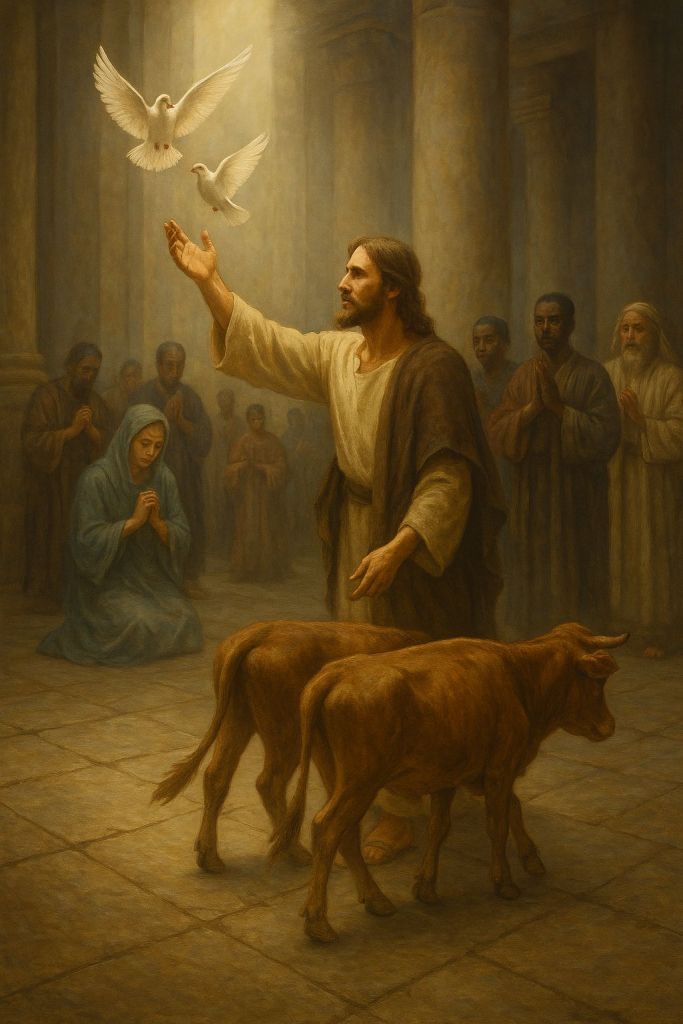
This passage always fascinated a member of my church. Every year, he would offer a fresh insight, helping us look again. One year, he pointed out something I’d never noticed: Jesus didn’t react in a fit of rage. He entered the temple, saw what was happening – the corruption, the injustice – and left. It was the next day that He returned and overturned the tables.

Even in righteous anger, Jesus was deliberate. His actions were considered, purposeful. And they were compassionate – He drove out the cattle, yes, but released the birds, sparing the vulnerable. He disrupted the systems that were exploiting the poor and the foreigner, especially in the very part of the temple – the Court of the Gentiles – meant to welcome those on the margins.

There are so many layers to this scene. It is rich with symbolism and challenge. It gives us permission to feel angry at situations, and it reminds us that God is for everyone.

As for me, when I see injustice, I find it hard to watch. But I also find it hard to confront. My voice trembles. My hands shake. My heart races. Speaking up comes at a personal emotional cost. But more and more, I realise I must imitate Christ, as hard and as uncomfortable as that might be.

Because there are people who don’t have a voice. Who don’t have the opportunity to speak up. And if I can, then I must. Not just out of duty, but as a privilege. To stand in solidarity. To protect the vulnerable. To clear space for worship, welcome, and justice – just like Jesus did in the temple.

So today, I’m asking myself where is Jesus encouraging me to speak up, even when it’s costly and uncomfortable?

May God give me the strength and the courage to imitate Jesus.

Lent 2025: The Picnic Basket and the Cluttered Table

Yesterday’s reflection took me to a familiar verse—one I’d already chatted about last week in a conversation about prayer. Philippians 4:6-7:

Do not be anxious about anything, but in every situation, by prayer and petition, with thanksgiving, present your requests to God. And the peace of God, which transcends all understanding, will guard your hearts and your minds in Christ Jesus.”

It’s comforting… and also challenging.

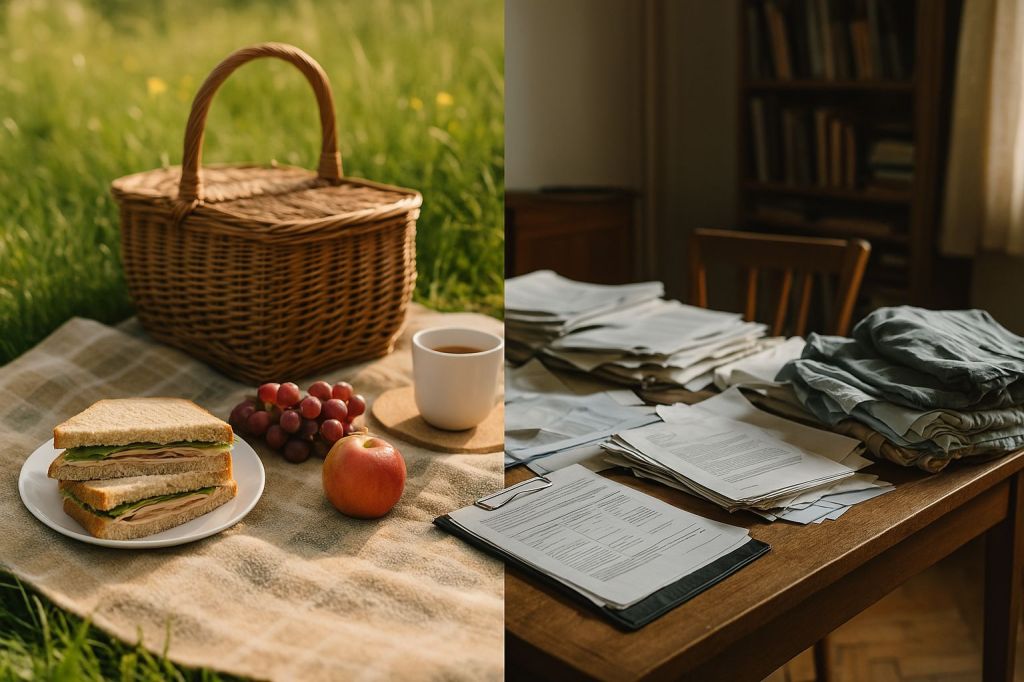
Because I do bring my requests to God. I lay them out like items from a picnic basket – my worries, my fears, my concerns for people I love. I try to be honest and open, to do exactly what this verse says.

And then? I pack it all back up again and carry it with me.

I wonder if anyone else does that.

It’s not that I don’t trust God. I do. Rationally, I believe God can handle far more than I can. But emotionally? Letting go feels unnatural. Especially when it comes to people I love; how can I just leave those concerns at God’s feet and walk away?

But maybe prayer isn’t about pretending our worries don’t exist. Maybe it’s more like clearing clutter from a dining table.

You know that moment when you’re trying to share a meal with someone, but the table is piled high with unopened post, paperwork, and laundry that still hasn’t found a home? There’s no space for connection until you move all that stuff aside.

That’s what prayer can be. Not just handing over our fears, but making room. Saying, “Here it is, Lord – all of it – and now I want to sit with You.”

We might still feel the weight of our concerns. But we’re no longer holding them alone. And in that space, peace, unexpected, inexplicable peace, can begin to grow.

It reminds me of something I have on a poster at home and at work. It says:

“I am God. Today I’ll be handling all your problems. Please remember that I don’t need your help. If the devil happens to deliver a situation to you that you can’t handle—do not attempt to resolve it! Kindly put it in the S-F-J-T-D box: the Something For Jesus To Do box. It will be addressed in My time, not yours. Once the matter has been placed in the box, do not hold onto it or attempt to remove it—holding on or removing it will delay the resolution of your problem! If it’s a situation that you think you are capable of handling, please consult Me in prayer to be sure it’s the proper resolution. Because I do not sleep, nor do I slumber, there’s no reason for you to lose any sleep. Rest, My child. If you need to contact Me, I’m only a prayer away.”

Maybe I need to read that more often.

So here’s my gentle challenge today—to myself and to you: what if we really did try to leave it with God? What if we let the clutter go, even just for today, and made room at the table?

In that space, God’s peace has a way of showing up—often quietly, always faithfully.

Lent 2025: Letting Joy In

Today marks the beginning of Holy Week, the final stretch of Lent. We’ve been preparing for this for weeks, waiting, reflecting, drawing nearer to God.

Palm Sunday always feels a little odd to me. It’s a day of triumph, of Hosannas and palm branches waved in the air. Jesus enters Jerusalem to the cheers of the crowd, riding on a donkey as prophecy foretold. It’s joyful, symbolic, powerful.

And yet, we know what’s coming.

We know that in just a few days, the cheers will turn to jeers. The palm branches will be trampled underfoot. The crowd will cry “Crucify.” There will be betrayal, suffering, and a death that shakes the earth. And then, there will be an empty tomb, confusion and, eventually, celebration.

So it’s hard to stay in this moment. Hard to hold Palm Sunday in its own right without skipping ahead to what’s next.

But maybe that’s the point. Maybe Palm Sunday invites us into the tension, into a moment of praise that lives alongside foreboding. Into joy that isn’t naïve, but brave.

Because Jesus knows what’s ahead. He knows the path leads to betrayal, pain, and death. And still, he rides into the city. Still, he accepts the praise, receives the joy, and allows this moment to be what it is: a celebration of the coming Kingdom.

Jesus doesn’t deflect the joy or stop the crowd. When the religious leaders urge him to quiet things down, he says, “If they keep silent, even the rocks will cry out.” It’s as if the joy must be expressed. It matters.

And that, perhaps, is something we can learn from.

Even when there’s something we dread on the horizon, even when the future feels uncertain or heavy, we are still allowed joy. We are allowed to stay in the moment and celebrate what is good and true, even for a little while. Not to deny what’s coming, but to strengthen us for it.

So today, I’m trying to stay with Palm Sunday. To hold the Hosannas in my heart. To celebrate the King who comes in peace, even when I know the path ahead leads to the cross. Because the joy is part of the story too.

Lent 2025: Our Fruit

Some days, a passing comment can stay with you, nudging your heart, stirring a quiet reflection.

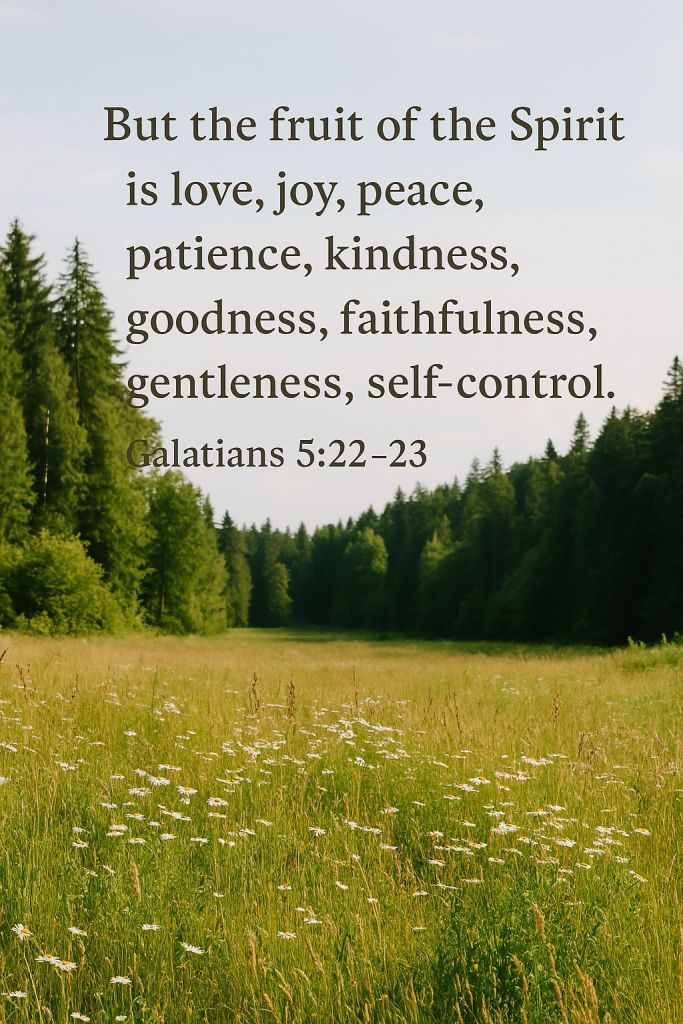
In Paul’s letter to the Galatians, he writes about life by the Spirit, and the fruit that shows in our lives as a result. It’s one of those Bible lists I learnt by heart growing up: “The fruit of the Spirit is love, joy, peace, patience, kindness, goodness, faithfulness, gentleness, and self-control.” (Though, if I’m honest, I usually forget gentleness when trying to recite them from memory!)

What’s striking is how these fruits often show up in everyday, ordinary interactions. You probably know people who bring joy with them wherever they go, or who just radiate kindness or patience. I do, and I find myself drawn to them. I want to be around them.

Today, I had one of those moments that made me stop and wonder. A friend at work asked if I was going to be at something tomorrow. I said I wasn’t sure, I wasn’t scheduled to be there. They just smiled and said, “It’s just better when you’re there.”

That simple comment made me pause. Could it be that I’m showing some fruit of the Spirit? Maybe there’s a gentleness that puts people at ease, or a peace that settles a room?

And it made me wonder: what fruit is growing in me? What’s the evidence of the Spirit at work in my life?

What about you? What fruit of the Spirit do others see in you? What fruit do you want to see more of in your life and your relationships?

Maybe take a quiet moment today to pray, to reflect, and to ask God to grow that fruit in you.

Lent 2025: A Mixed Bag and a Merciful God

Phew! I’ve arrived at Friday evening.
Do you ever have weeks that feel too full, like you’re not quite sure how you managed to fit everything in? That’s been my experience this week. A week that’s been rich and busy, a mixture of beautiful and overwhelming moments. And now I’ve reached the end feeling tired, but with so much to be thankful for. Stretched, yes, but somehow still grounded.

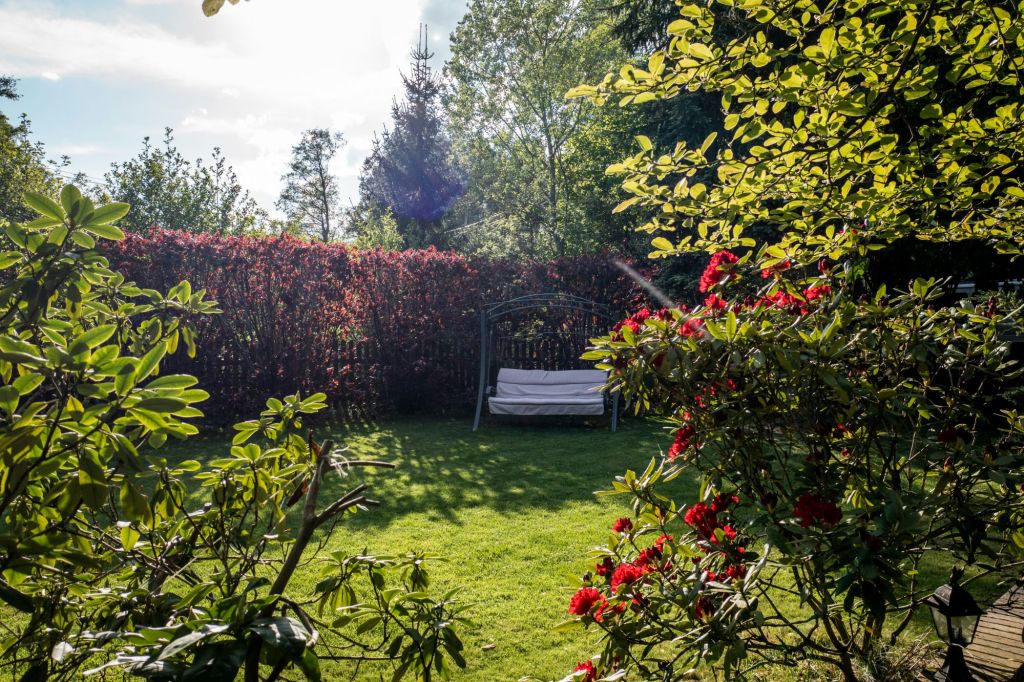
One highlight was meeting with my spiritual director – someone I see regularly who helps me reflect on and deepen my relationship with God. We sat in his living room, looking out over the garden and soaking up the sunshine. We covered a lot in a short space of time, but especially explored my growing sense of being God’s beloved daughter. It feels like such a victory to be able to say that with confidence, a milestone in a long journey of learning to believe this fundamental truth of my faith.

We also talked about keeping that relationship with God fresh. Prayer can become routine, even dry, so I try to explore different ways of connecting. Recently, I’ve been finding life in journaling prayers writing my thoughts and feelings helps keep my mind focused. He introduced me to something new: centering prayer. I’d never come across it before, but I’m excited to try it. Stay tuned – there might be a blog post about it soon! There was something special about having that pause, that moment of peace in the midst of a full week.

But it hasn’t all been peaceful. Work brought a fair amount of pressure. I’m someone who likes to help, to solve problems, but this week, that willingness came with weight. I heard more than once, “We don’t know what we’d do without you.” It’s a kind sentiment, but it also carries pressure. I don’t want to let people down. In the middle of it all, I’ve had to remind myself that my worth doesn’t come from what I do, but from who I am: a child of God.

Still, in the mix, there have been little moments of joy. Cheesy chips and catch-ups with a colleague. Chocolate chip and banana bread and butter pudding, and a quiz with friends. Awful TV and laughter with my housemates. Moments to let go and simply enjoy.

So yes, it’s been a full week – a mixed bag of emotions, energy, and encounters. It hasn’t always been peaceful, but I’ve known God with me through it all.
And that, I think, counts as grace.

Lent 2025: If in doubt, give it a clout!

When I finished work today, I got in my car to drive home and found my seatbelt was stuck. No matter how hard or softly I pulled, it wouldn’t budge. This was slightly alarming – I can’t drive the car without a seatbelt, and I need to drop it to the garage tomorrow for a check-up!

The more I dwelt on it, the more I panicked. And the more I panicked, the more desperately I pulled on that seatbelt. Still nothing.

I have to admit, in that moment, praying wasn’t the first thing on my mind. Instead, I called my parents. I explained I’d tried everything; fast and slow, key in the ignition, key out, locked and unlocked the car. Nothing worked.

My lovely dad reminded me that the seatbelt mechanism isn’t electronic, it’s simple, mechanical. Then he said something very him: “If in doubt, give it a clout!” I have to admit, it was quite satisfying to thump the wall of my car trying to knock the seatbelt loose! Even more satisfying: it worked. I had to be ever so gentle to reel just enough to fasten myself in and drive away, but it worked!

So what does this have to do with God?

Two things came to mind:

First, God’s provision often shows up in the people around us.
Although I didn’t consciously pray, the people I called were exactly the right ones. One calmed me down. The other explained and offered a solution. I could have sat in my frustration, or reached out to someone who made me feel worse. But I didn’t. Maybe that was an answer to an unconscious prayer. I’ve been trying to bring God into every part of my day, and maybe, just maybe, God met me in that phone call.

Second, I looked everywhere else before I looked at what was right in front of me.
I couldn’t see the seatbelt mechanism, so I fiddled with everything else: ignition, clutch, door, seat… all the visible bits. But the issue was just below the surface, and the solution was surprisingly simple. Isn’t that so often the way? We look everywhere but God when we feel stuck. We overcomplicate things. We try to fix things from the outside when what’s needed is a bit of honesty, a little courage, and a direct route to the root of the problem.

So today reminded me: don’t overlook the simple solution. Don’t be afraid to reach out to the people God’s placed in your life. And don’t forget, even a small clout can be holy if it helps you move forward.

Lent 2025: Because God Loves

Today was an opportunity for a midweek walk with reflection. The weather was glorious – sunny and breezy – and the passage is one I come back to time and again. Romans 8: 38-39: For I am convinced that neither death nor life, neither angels or demons, neither the present, not the future, nor any powers, neither height nor depth, not anything else in all of creation, will be able to separate us from the love of God that is in Christ Jesus our Lord.

As I was walking today with this words in mind, I was also reminded of a song called, ‘The God Who Stays’ by Matthew West. The song is about how God never gives up on us, never walks away, even if the people around us or even ourselves would be tempted to label us a list cause. The bridge section says,
my shame can’t separate,
my guilt can’t separate,
my past can’t separate,
I’m yours forever
my sin can’t separate
my scars can’t separate
my failures can’t separate
I’m yours forever
No enemy can separate
Now power of hell can take away
Your love for me will never change
I’m yours forever.’

The passage from Romans is quite extensive – with the handy phrase ‘not anything else in all creation’ mopping up what is missed in the rest of the list – but I also found it helpful to play that song through in my mind too. There’s things in Matthew West’s list that are implied in Paul’s, but somehow it was good to actually name them. How often have we counted ourselves out because we’ve done things that are too bad, or we’ve messed up too much? Have you ever labelled yourself as broken or beyond repair?

Here’s the thing the Paul (and Matthew West) remind us: there is nowhere you can go that God won’t love you, there is nothing you can do to make God love you less, and there is nothing supernatural that can get in the way of God’s love for you. Because God loves. As we approach Easter and see pictures of Jesus on a cross – it’s because God loves.

Maybe take a moment today to sit with that truth: you are deeply, unfailingly loved. Not because of what you’ve done or haven’t done. Not because you’ve earned it. Simply because God loves you — and nothing can ever change that.